
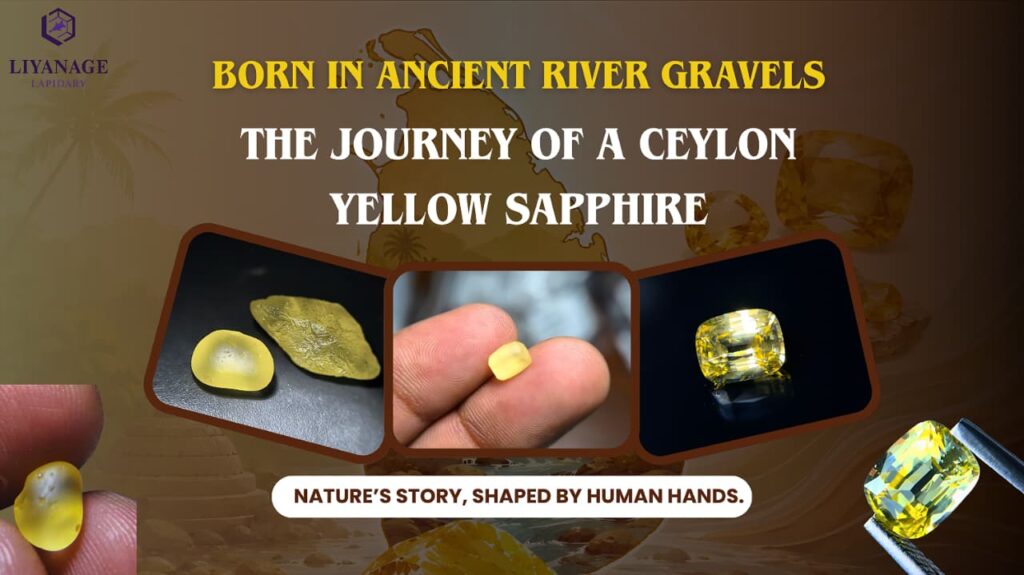
Sri Lanka has been known as the Gem Island for more than two thousand years, producing some of the world’s most respected sapphires. While many gemstone lovers admire a finished gemstone once it is set into jewelry, the real story begins much earlier—deep within the gravels of ancient alluvial deposits where nature slowly creates these treasures over millions of years.
This particular gemstone began its journey in Heraniyawaka village around mining in Sri Lanka, a region known among local miners for producing natural sapphires from river-related alluvial deposits. What eventually became a beautiful 1.23 carat cushion step-cut sapphire first appeared as a small pebble-shaped rough weighing 2.45 carats.
Unlike crystal-shaped sapphires that display obvious crystal faces, this rough sapphire was found in a naturally water-worn alluvial form. Years of movement through ancient river systems had rounded the surface, giving it the appearance of a smooth yellow pebble rather than a traditional crystal. To an untrained eye it might have appeared ordinary, but experienced gemstone miners understand that some of the finest sapphires emerge from these alluvial gravels.
The Discovery in Heraniyawaka
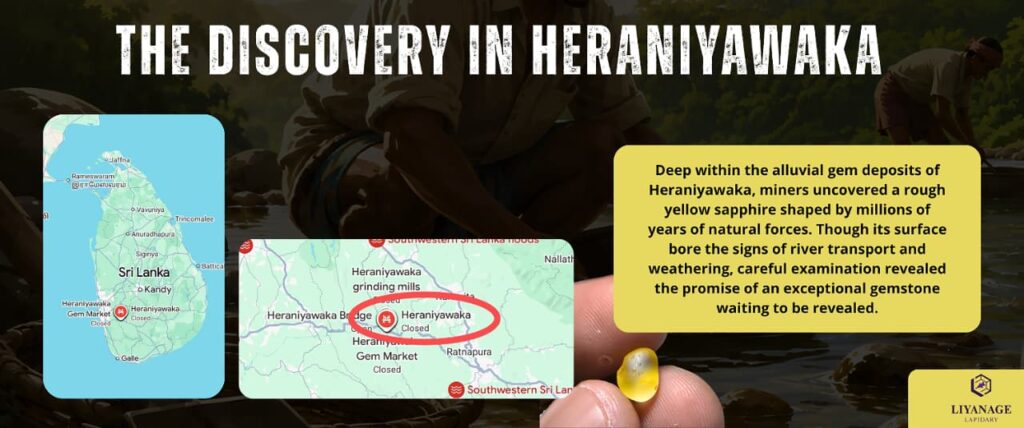
Heraniyawaka is part of Sri Lanka’s gemstone-producing region where miners continue traditional alluvial mining methods. The sapphire was recovered from ancient gem-bearing gravels deposited by prehistoric river systems. These deposits contain gemstones that have traveled considerable distances over geological time before settling within the gem-rich layers that miners work today.
When the rough was first examined, several positive characteristics became immediately apparent. The stone displayed a natural yellow body color, good transparency potential, and a shape that suggested the possibility of producing an attractive faceted gemstone.
Because the sapphire was found in an alluvial environment, the surface carried natural wear marks and weathering features. These characteristics are common in river-deposited sapphires and often conceal the true quality hidden inside the rough.
Evaluating the Rough
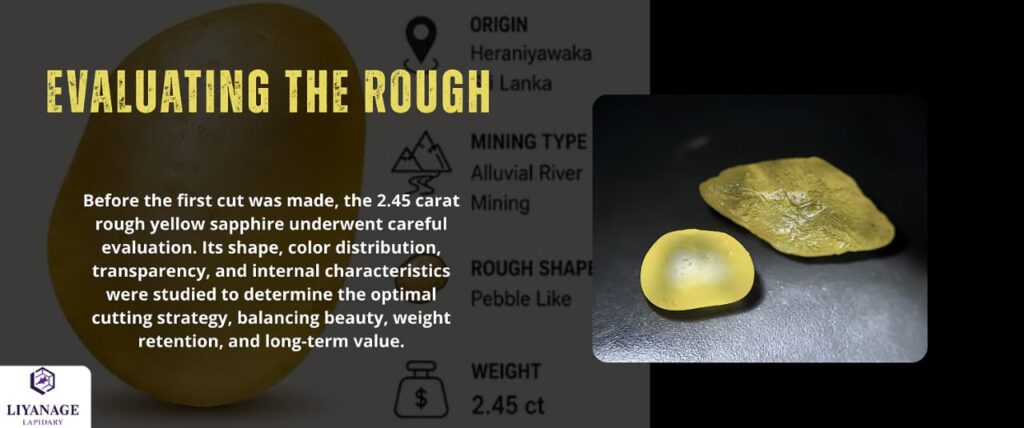
Every cutting project begins with planning. A gemstone cutter must study the rough from every angle before making the first cut. Decisions made during this stage determine not only the final appearance of the gemstone but also the weight recovery and overall value.
The 2.45 carat rough presented both opportunities and challenges. The natural pebble shape offered flexibility, but achieving the best balance between beauty and weight retention required careful consideration.
Internal features, color distribution, and orientation all had to be evaluated before cutting began. Since this sapphire was completely natural and unheated, preserving its natural beauty became an important priority throughout the process.
The Customer’s Special Request
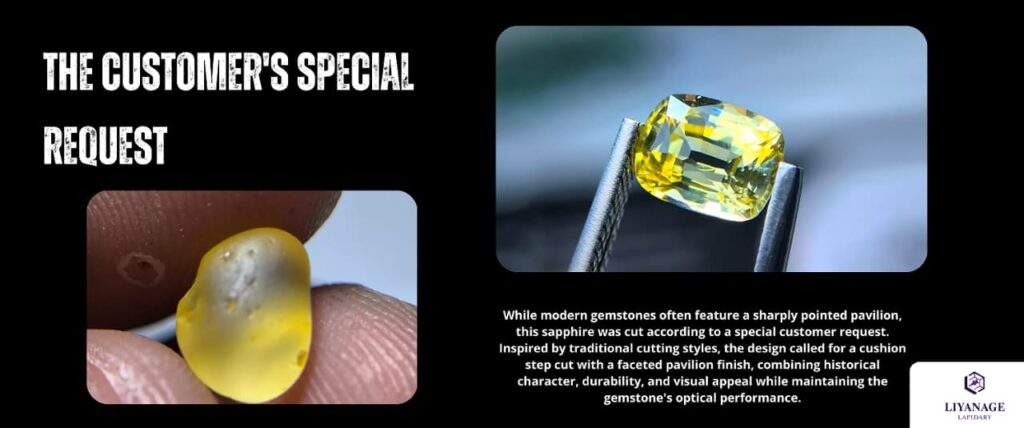
What makes this gemstone particularly interesting is that the final design was guided by a specific customer request.
Rather than choosing a modern pavilion with a sharp point at the base, the customer preferred a softer finish inspired by historical cutting styles. The request was to create a cushion step cut while finishing the pavilion with a faceted end rather than a sharp termination.
This approach is reminiscent of certain old mine cut concepts where cutters often prioritized character, durability, and visual charm rather than creating an extremely pointed pavilion.
Such requests demonstrate how gemstone cutting is both a technical and artistic process. Every customer has different preferences, and a skilled lapidary must translate those preferences into a finished gemstone while maintaining optical performance.
The Transformation Process
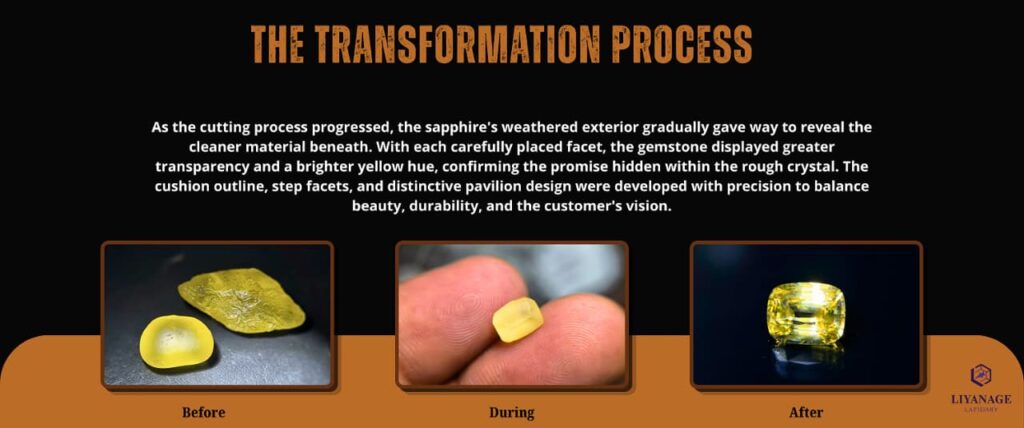
As cutting began, portions of the weathered exterior were removed to reveal the cleaner material beneath. This stage often brings excitement because it allows the cutter to see the true color and transparency hidden inside the rough.
Gradually, the sapphire began to reveal a brighter and more attractive yellow tone. The stone responded well to the cutting process, confirming the potential that had been anticipated during the planning stage.
The cushion outline was carefully developed to maximize beauty while respecting the customer’s design preferences. Step facets were added to create a structured appearance that enhances the gemstone’s shape and highlights its natural color.
Particular attention was given to the pavilion. Instead of ending in a sharp point, additional facets were incorporated to create a more refined and durable finish. This subtle detail gives the gemstone a distinctive personality while maintaining excellent craftsmanship.
From 2.45 ct to 1.23 ct
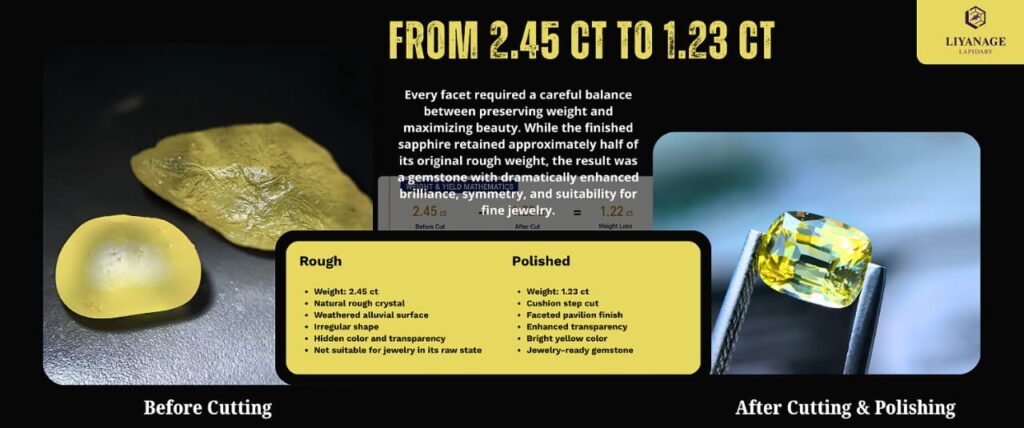
Weight loss is an unavoidable part of gemstone cutting. The goal is not simply to retain as much weight as possible but to create the most attractive and valuable gemstone from the available material.
The original rough weighed 2.45 carats. After cutting and polishing, the finished gemstone reached a final weight of 1.23 carats.
This represents a recovery that reflects both the natural shape of the rough and the design requirements of the finished stone. Material had to be removed to eliminate surface weathering, improve symmetry, and achieve the requested cushion step-cut design.
While the finished weight is approximately half of the original rough weight, the transformation dramatically increased the gemstone’s visual appeal and usability in fine jewelry.
The Finished Gemstone
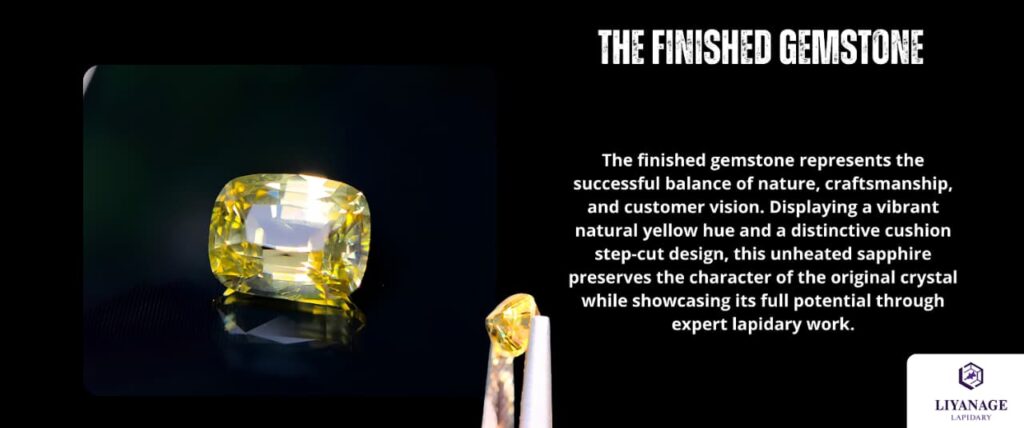
The completed gemstone measures as a beautifully proportioned cushion step cut and displays a bright natural yellow color. The faceting arrangement creates attractive reflections while maintaining a classic appearance.
Being completely unheated, the sapphire retains its natural color without enhancement. Natural unheated sapphires remain highly appreciated among collectors and gemstone enthusiasts because they represent the gemstone exactly as nature produced it.
The modified pavilion design adds individuality to the stone and reflects the collaborative relationship between customer and cutter.
Why Sri Lankan Sapphires Are Special
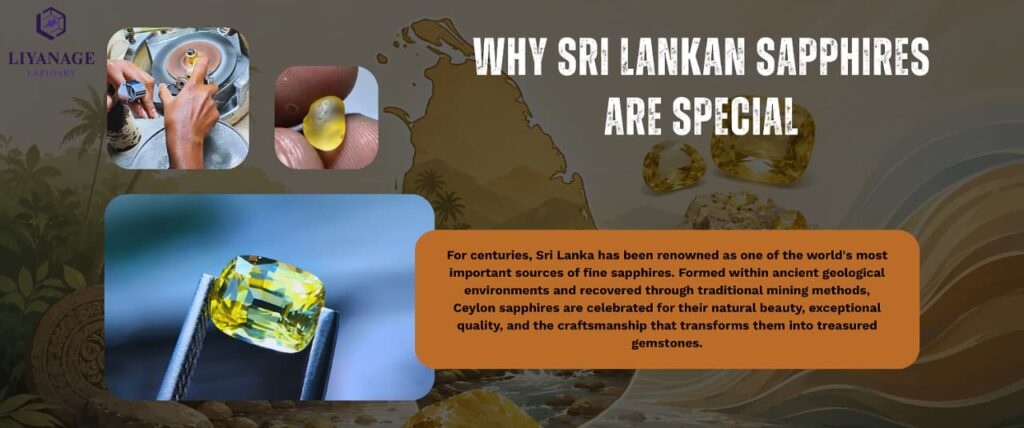
Sri Lanka continues to produce some of the world’s most desirable sapphires due to its unique geological environment. The island’s ancient metamorphic rocks and extensive alluvial deposits have created ideal conditions for gemstone formation and preservation.
Many of the sapphires found today have spent millions of years within these geological systems before being discovered by miners.
The combination of natural origin, traditional mining methods, skilled cutting expertise, and centuries of gemstone heritage makes Ceylon sapphires highly respected throughout the international gemstone trade.
A Story Hidden Inside Every Gemstone
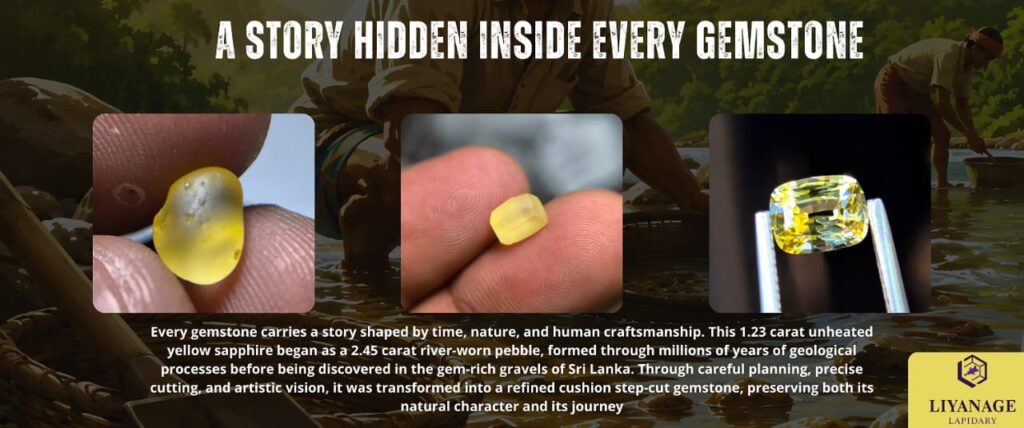
This 1.23 carat unheated yellow sapphire represents much more than a finished gemstone. It is the result of geological processes spanning millions of years, traditional alluvial mining in Heraniyawaka village around mining in Sri Lanka, careful planning, precision cutting, and a customer’s vision brought to life through lapidary craftsmanship.
From a small river-worn pebble weighing 2.45 carats to a finished cushion step-cut gemstone with a distinctive old-mine-inspired pavilion, this sapphire demonstrates how every gemstone carries a unique story.
Its journey from the alluvial gravels of the Gem Island Sri Lanka to a finished gemstone is a reminder that behind every beautiful stone lies a combination of nature, skill, patience, and human artistry.
FAQ
1.Is this sapphire natural?
Yes. This is a natural Ceylon sapphire sourced from Heraniyawaka village around mining in Sri Lanka.
2. Has the sapphire been heated?
No. The gemstone remains completely unheated.
3. What was the original rough weight?
The original alluvial rough sapphire weighed 2.45 carats.
4. What is the final gemstone weight?
After cutting and polishing, the finished gemstone weighs 1.23 carats.
5. Why was a cushion step cut chosen?
The customer specifically requested a cushion step cut to create a classic appearance while maximizing the beauty of the stone.
6. What makes the pavilion unique?
Instead of a sharp pavilion point, the gemstone was finished with faceted pavilion ends inspired by traditional old mine cut concepts, creating a distinctive and durable design.