
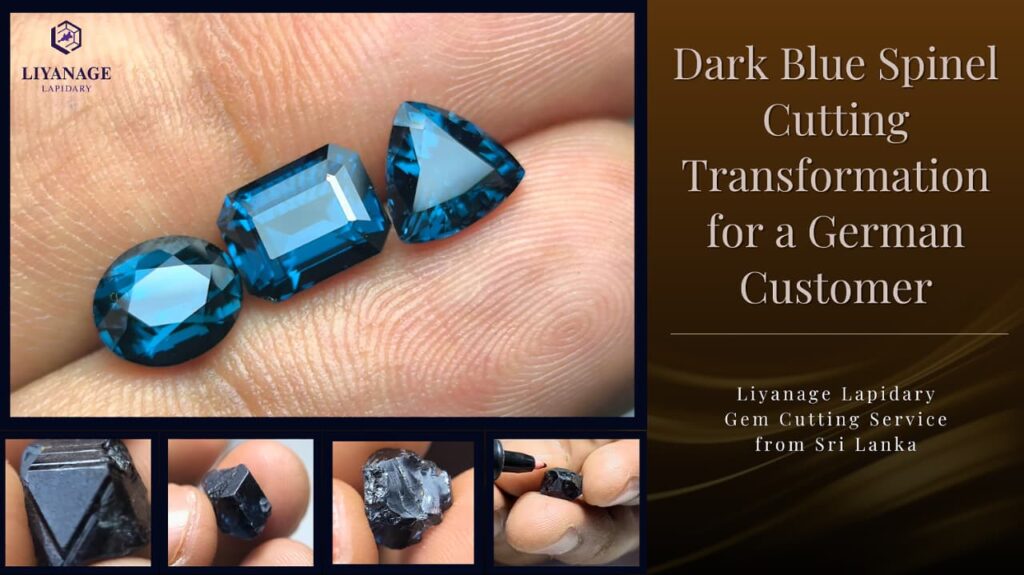
Liyanage Lapidary Gem Cutting Service from Sri Lanka
This cutting project shows how careful lapidary planning can improve the appearance, clarity, and usable shape of very dark spinel rough. A customer from Germany purchased these dark blue spinels from a Sri Lankan gemstone source and brought them to Liyanage Lapidary for professional cutting service. The rough stones appeared very dark, almost black in some areas, and the customer requested standard finished shapes with better open color, cleaner clarity, and practical jewelry use.
For dark spinel material, cutting is not only about creating a shape. The main challenge is to study the rough carefully and decide how to open the color without losing unnecessary weight. Very dark blue spinel can look closed if the pavilion angle, crown height, and facet arrangement are not planned properly. In this project, the goal was to transform the rough into three usable finished gemstones with more visible blue color, better light movement, and improved clarity.
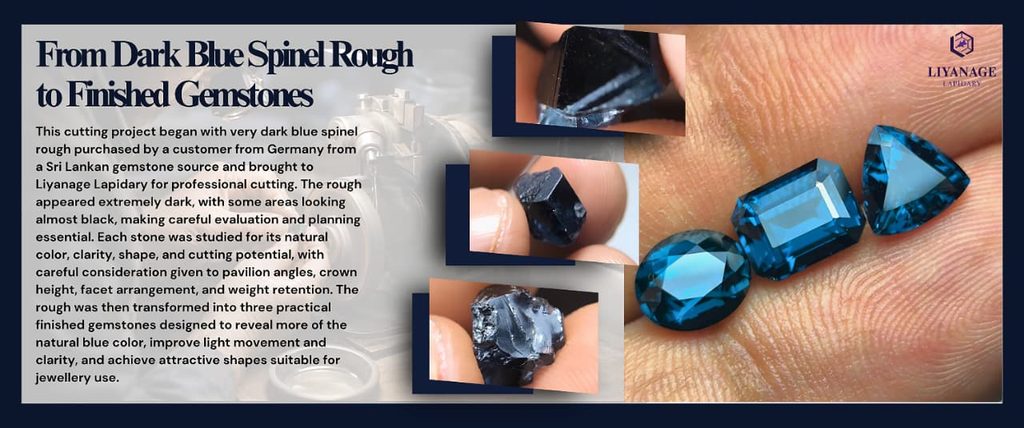
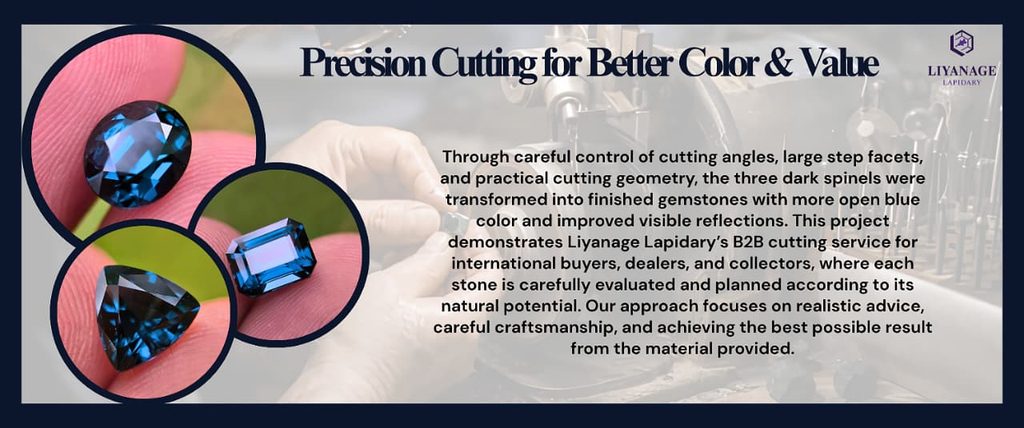
The customer provided three rough spinels with original weights of 4.99 ct, 4.59 ct, and 2.57 ct. Each stone had dark body color and included areas that needed attention before cutting. Some areas were not suitable to keep in the final stone because they would affect clarity, transparency, and final appearance. Before cutting, we discussed the possible inclusion removal, final shape options, and the best way to balance color, clarity, weight retention, and jewelry demand.
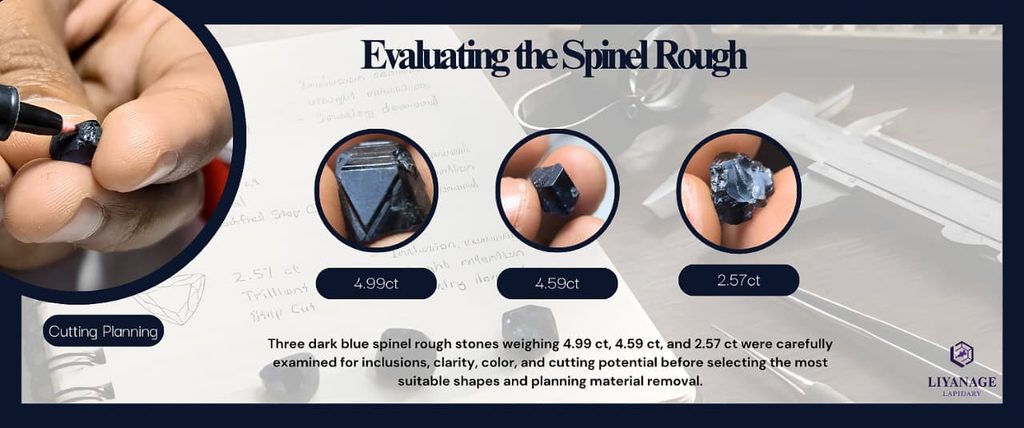
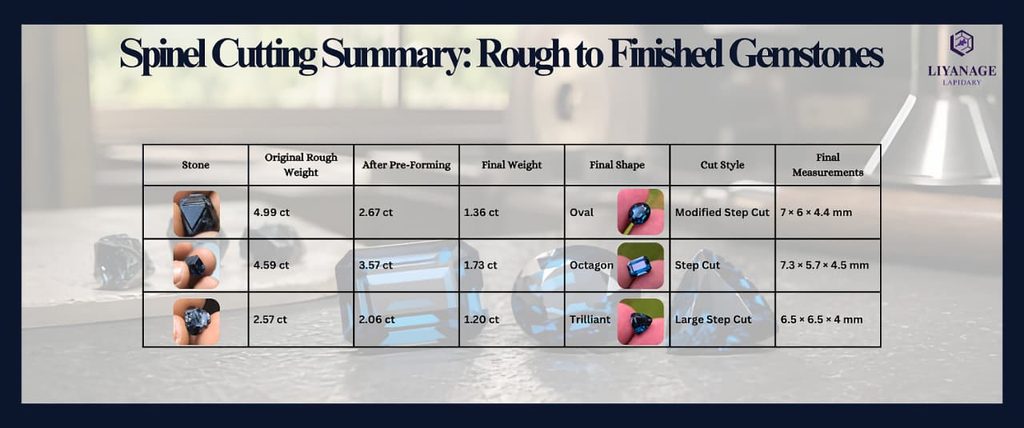
The 4.99 ct rough was first considered for a pear shape. After further evaluation, the design was changed to an oval because the oval shape gave a better chance to improve the open color. This is a common decision in lapidary work, where the first planned shape may be changed after studying the rough more deeply. The final oval spinel was finished at 1.36 ct with a modified step cut and measurements of 7 × 6 × 4.4 mm. The modified step-cut style helped create broader reflections and a more balanced face-up appearance.
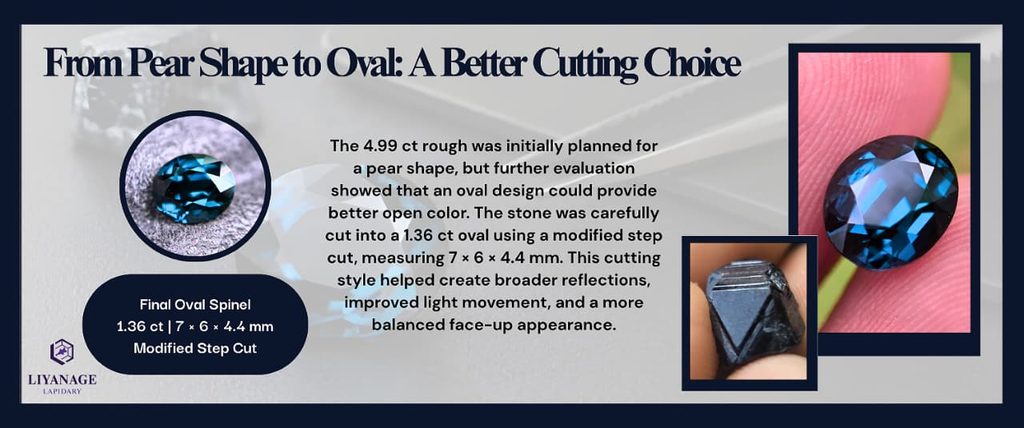
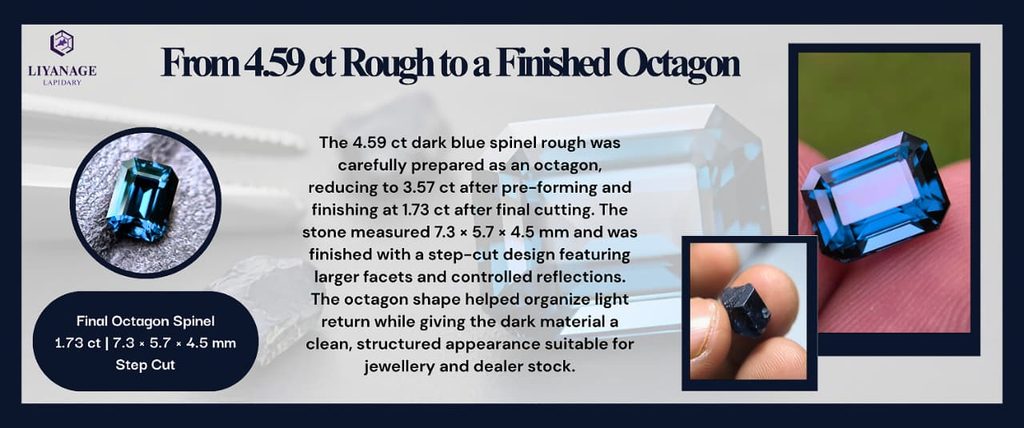
The 4.59 ct rough was prepared as an octagon. After pre-forming, it reduced to 3.57 ct, and after final cutting it finished at 1.73 ct. The final measurements were 7.3 × 5.7 × 4.5 mm. For this stone, a step-cut design was used to create larger facets and controlled reflections. Octagon cuts are practical for dark material because they can help organize light return while giving the stone a clean, structured appearance suitable for rings, pendants, and dealer stock.
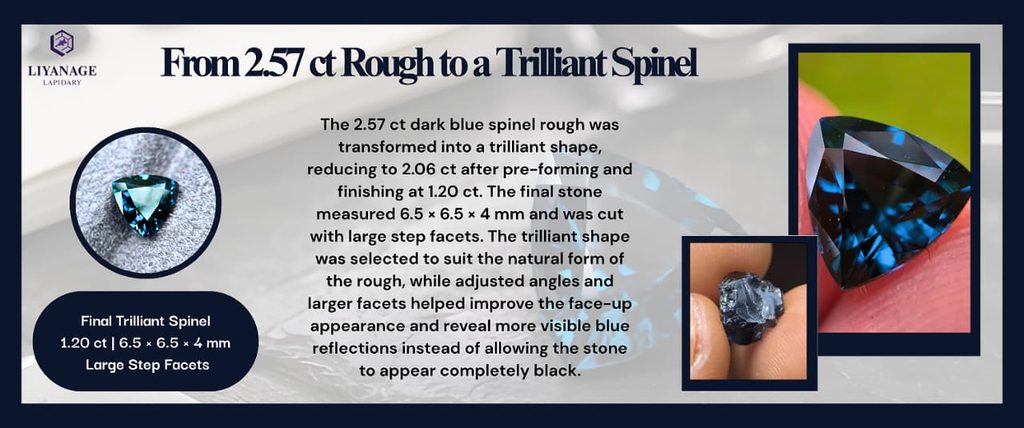
The 2.57 ct rough was transformed into a trilliant shape. After pre-forming, it became 2.06 ct, and the final cut weight was 1.20 ct. The finished trilliant measured 6.5 × 6.5 × 4 mm and was cut with large step facets. The trilliant shape was selected to suit the natural form of the rough while improving the face-up appearance. Large facets and adjusted angles helped the stone show more visible blue reflections instead of looking fully black.
A key part of this project was inclusion management. The rough stones had included areas around some sections, and those areas needed to be removed carefully. Removing inclusions is not simply cutting away material; it requires experience to decide which areas must be removed and which natural features can remain without affecting the final beauty of the gemstone. By discussing the possibilities with the customer, we focused on making the finished stones as clean as realistically possible while still protecting final weight.
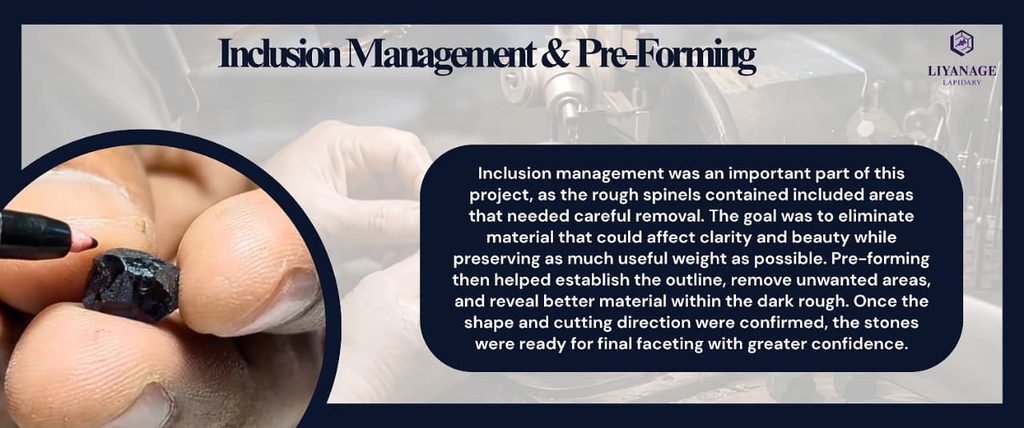
This project also shows why pre-forming is important in gemstone cutting. Pre-forming allows the cutter to remove unwanted areas, establish the outline, and check how the stone reacts before final faceting. In these spinels, pre-forming helped reveal better material inside the dark rough. Once the shape and direction were confirmed, final cutting could continue with more confidence.
The cutting approach used for these stones focused on step cuts, large facets, and different angles. Dark gemstones often need careful angle control because a wrong pavilion angle can make the stone appear too dark. By using large, clean facets and practical cutting geometry, the stones were given more open color and better visible reflections. The final result changed the rough from dark, difficult-looking material into three finished gemstones with usable blue appearance and improved market presentation.
This transformation is a good example of Liyanage Lapidary’s B2B cutting service for international customers. Many gemstone buyers, dealers, and collectors purchase rough or preformed gemstones but need a reliable cutting service to improve the final value. At Liyanage Lapidary, each cutting project is handled with discussion, planning, and realistic advice. We do not promise impossible results, but we focus on the best possible outcome from the material provided.
For buyers, this type of service is useful when stones need recutting, repolishing, pre-forming, inclusion removal, or shape correction. Some gemstones may look too dark, too deep, asymmetrical, or poorly finished before cutting. With proper planning, the final stone can become more suitable for jewelry manufacturing, dealer inventory, collector selection, or certification.
This German customer’s dark blue spinel project is now completed and ready to ship back to Germany. From very dark rough stones with included areas, the final result is a matched cutting transformation: one oval modified step cut, one octagon step cut, and one trilliant large step cut. Each gemstone now has a more open blue appearance, better clarity, and a professional finish.
Professional Gem Cutting Service from Sri Lanka
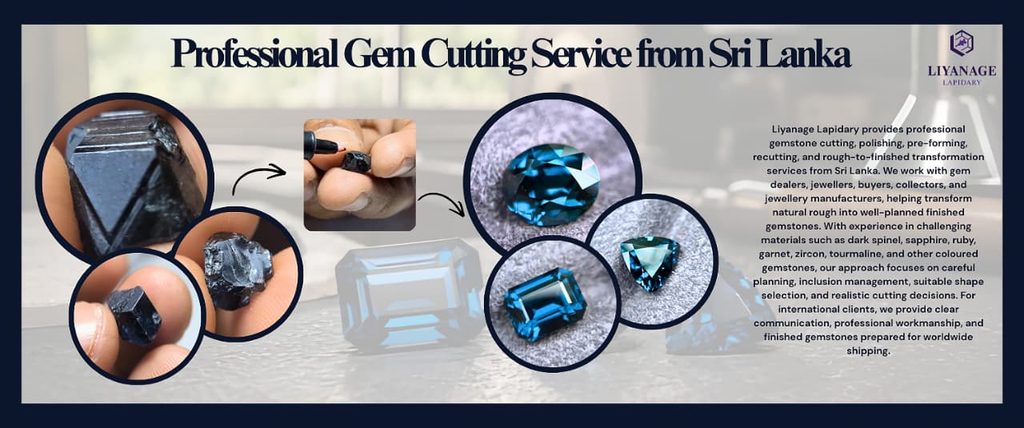
Liyanage Lapidary provides gemstone cutting, polishing, pre-forming, recutting, and rough-to-finished transformation services from the gem island Sri Lanka. Our work supports gem dealers, jewelers, gemstone buyers, collectors, and jewelry manufacturers who need practical cutting solutions for natural gemstones.
This project reflects our experience in handling difficult dark material, improving visible color, managing inclusions, and selecting suitable shapes based on the natural rough. For international clients, we provide clear communication, professional cutting decisions, and finished stones prepared for shipping worldwide.
Whether the gemstone is spinel, sapphire, ruby, chrysoberyl, garnet, zircon, tourmaline, or another colored stone, careful lapidary planning can make a strong difference in the final result. This dark blue spinel transformation from a German customer shows how experience, patience, and correct cutting strategy can turn challenging rough into cleaner, more usable finished gemstones.
FAQ – Dark Blue Spinel Cutting Transformation
1. Is this a natural spinel cutting project?
Yes. This project involved natural dark blue spinel rough stones purchased from a Sri Lankan source by a customer from Germany and brought to Liyanage Lapidary for professional cutting service.
2. What was the main challenge with these spinels?
The main challenge was the very dark body color. Some areas looked almost black, so the cutting had to be planned carefully to open the color as much as possible while keeping practical final weight and good clarity.
3. Why were different shapes selected?
Each rough stone had a different natural form, weight, and internal condition. The 4.99 ct rough was changed from the first pear idea to an oval to improve color. The 4.59 ct rough was suitable for an octagon, and the 2.57 ct rough was shaped into a trilliant.
4. Why did the stones lose weight during cutting?
Weight loss is normal in gemstone cutting. Material was removed to take away included areas, improve symmetry, open the color, and create proper final shapes. The goal was not only maximum weight retention, but the best balance between beauty, clarity, color, and usability.
5. What cutting styles were used?
The final stones were cut as an oval modified step cut, an octagon step cut, and a trilliant large step cut. Large facets and adjusted angles were used to help the dark blue spinel show more open color and better reflections.
6. Were inclusions removed during the cutting process?
Yes. The rough stones had included areas, and those parts were removed after discussion with the customer. The aim was to improve the final clarity as much as realistically possible while keeping useful finished sizes.
7. Why is pre-forming important in gemstone cutting?
Pre-forming helps decide the final shape before full faceting. It allows the cutter to remove problem areas, check color direction, improve outline, and prepare the stone for final polishing.
8. Are the finished stones suitable for jewelry?
Yes. The finished oval, octagon, and trilliant spinels are suitable for rings, pendants, custom jewelry, dealer stock, and collector selections, depending on the final buyer’s design requirement.
9. Was this project completed for an international customer?
Yes. This cutting service was completed for a customer from Germany. The finished stones are now ready to ship back to Germany after cutting and polishing.
10. Does Liyanage Lapidary provide similar cutting services?
Yes. Liyanage Lapidary provides gemstone cutting, polishing, pre-forming, recutting, inclusion removal, and rough-to-finished transformation services for gem dealers, jewelers, collectors, and international gemstone buyers.