
Liyanage Lapidary Gem Travel, Direct Sourcing, and Cutting Service from Sri Lanka
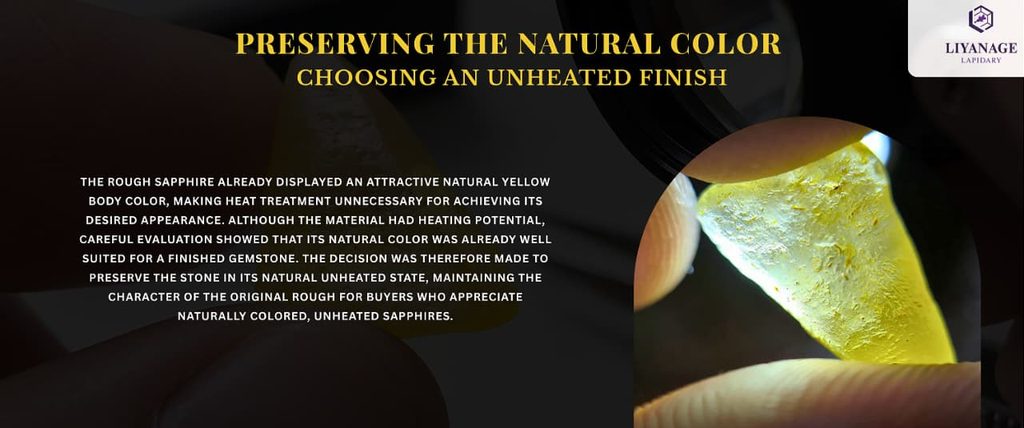
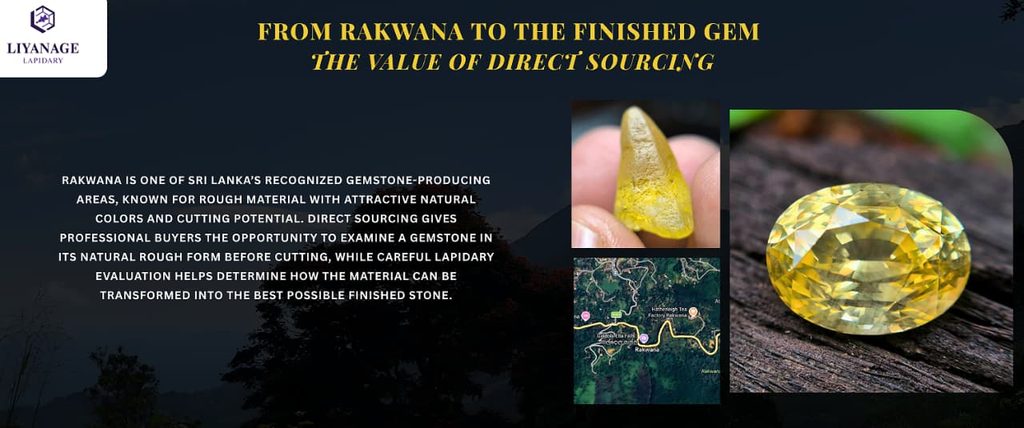
This yellow sapphire journey began during a gem hunting trip with our customer from Europe. Together, we visited the Sri Lankan source area and purchased this facet-grade natural yellow sapphire rough directly from Rakwana village around mining in Sri Lanka. The rough stone weighed 12.69 ct and measured 16.9 × 9.9 × 8.8 mm. In its rough form, it showed a natural yellow body color with an alluvial half-crystal appearance, giving us a strong first indication that the stone had good potential for cutting.
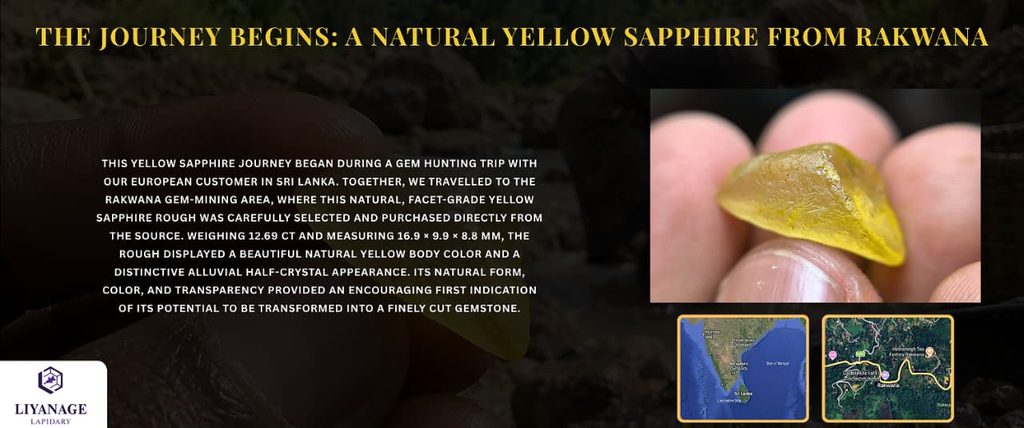
This was not only a gemstone purchase; it was a full sourcing and cutting experience. The customer was involved in the journey from the source area to the lapidary planning stage. At Liyanage Lapidary, we believe this type of direct sourcing experience gives buyers better understanding of the stone, its natural condition, and the cutting decisions needed before a finished gemstone can be created.
The rough had a long natural shape, with one side showing a pyramidal form. Because of this, selecting a standard cutting shape was not simple. A long rough stone can sometimes produce a long oval, pear, or cushion, but the final decision depends on color direction, depth, inclusions, crystal structure, and how much weight can be saved without affecting beauty. In this case, the natural outline and depth made an oval shape the most practical and attractive cutting direction.
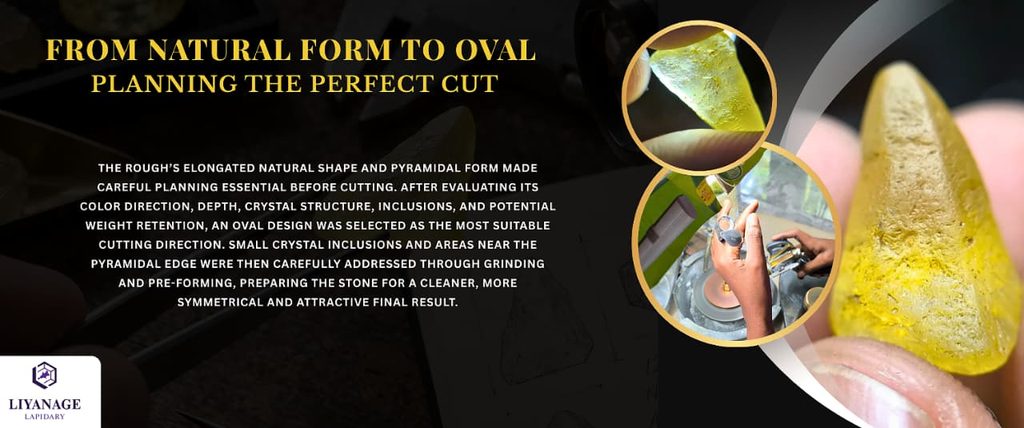
Another important part of the evaluation was the internal condition of the stone. The rough had small crystal inclusions, including areas near the pyramidal edge that needed attention. Some material had to be removed by grinding and careful pre-forming before final cutting. This step was necessary to improve the final clarity, symmetry, and face-up appearance. In gemstone cutting, removing small problem areas can make a strong difference in the final result, even though it reduces weight.
This yellow sapphire already had natural yellow color inside the rough. Because of that, the cutting decision was to finish the gemstone as unheated rather than planning it for heat treatment. The stone had heating potential, but after careful evaluation, we decided that the natural yellow color was already attractive and suitable for a finished gemstone. This made the final result more valuable for buyers who prefer natural unheated gemstones.
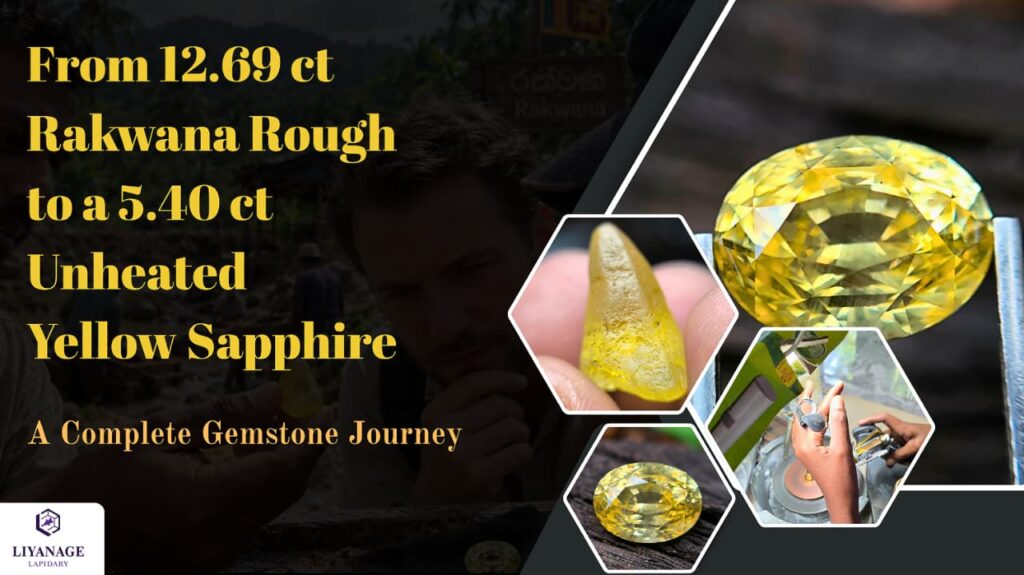
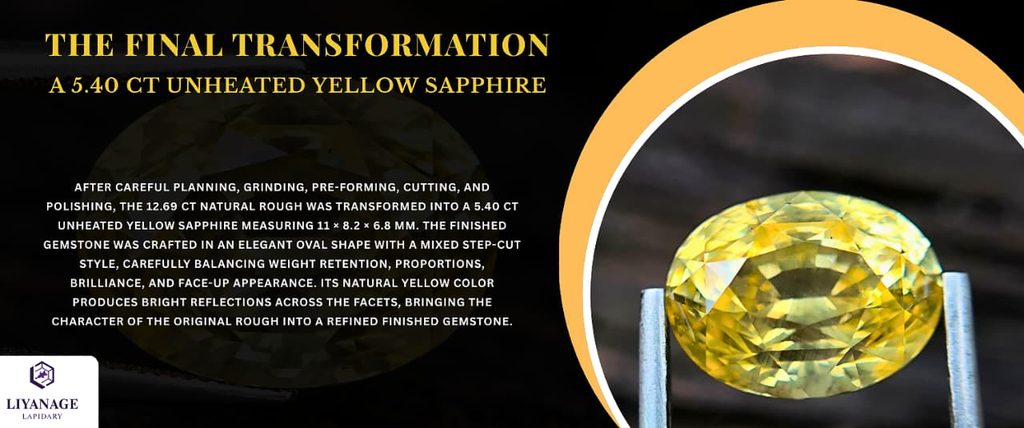
The cutting goal was to create a finished stone above the 5 ct range while keeping good brilliance and a practical jewelry shape. After careful planning, grinding, pre-forming, cutting, and polishing, the rough was transformed into a 5.40 ct unheated yellow sapphire, measuring 11 × 8.2 × 6.8 mm. The final stone was cut in a nice oval shape with a mixed step-cut style, giving it a balanced face-up appearance and bright yellow reflections.
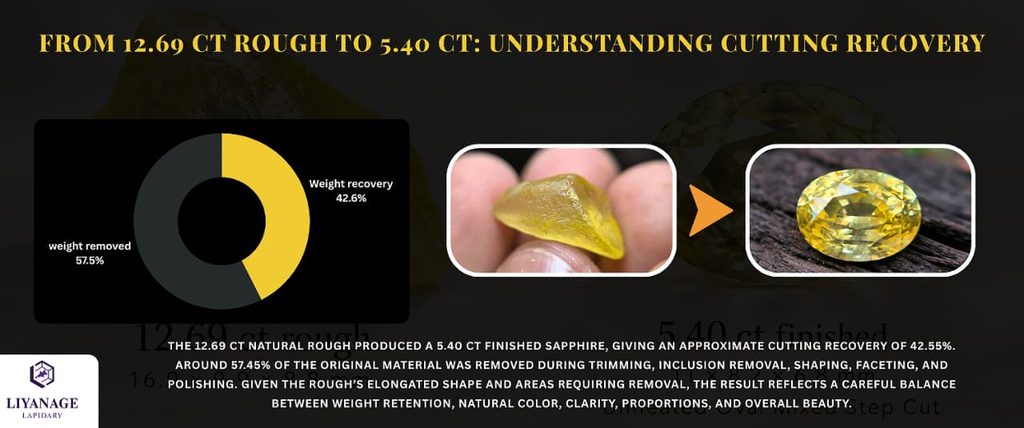
The cutting recovery from rough to finished gemstone was approximately 42.55%. This means the 12.69 ct rough produced a 5.40 ct finished sapphire, with about 57.45% material loss during trimming, inclusion removal, shaping, faceting, and polishing. For a rough stone with a long irregular shape, one sharp side, and areas requiring removal, this is a practical and professional recovery result. The final goal was not only maximum weight retention, but the best balance between size, color, clarity, shape, and market suitability.
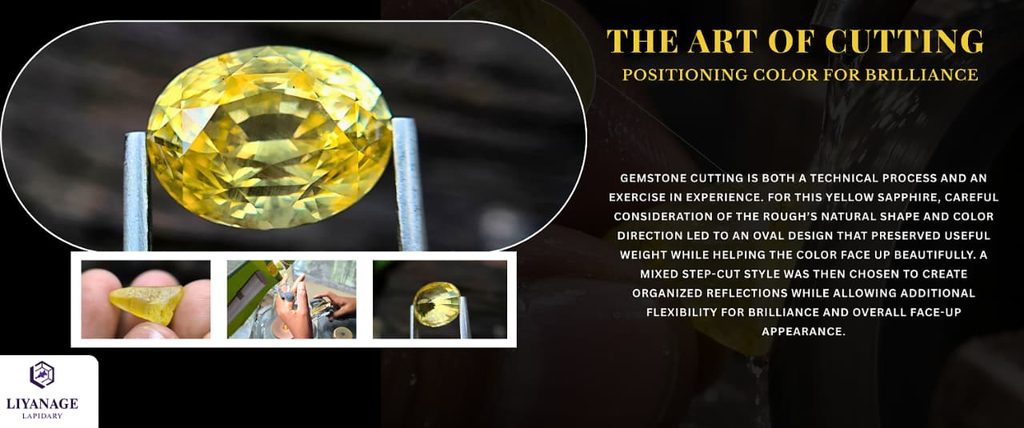
This project shows why gemstone cutting is both technical and experience-based. A rough stone may already contain attractive color, but that color must be positioned correctly through cutting. If the wrong direction or angle is selected, the stone may become too deep, too shallow, uneven in color, or less brilliant. For this yellow sapphire, the oval shape helped protect useful weight while allowing the cutter to open the color and improve the overall appearance.
The mixed step-cut style was selected to support the natural character of the stone. Step-cut facets can help create organized reflections and a clean structure, while mixed cutting allows more flexibility for brilliance and face-up beauty. This combination worked well for the yellow sapphire, especially because the stone had a long body and needed careful proportion control.
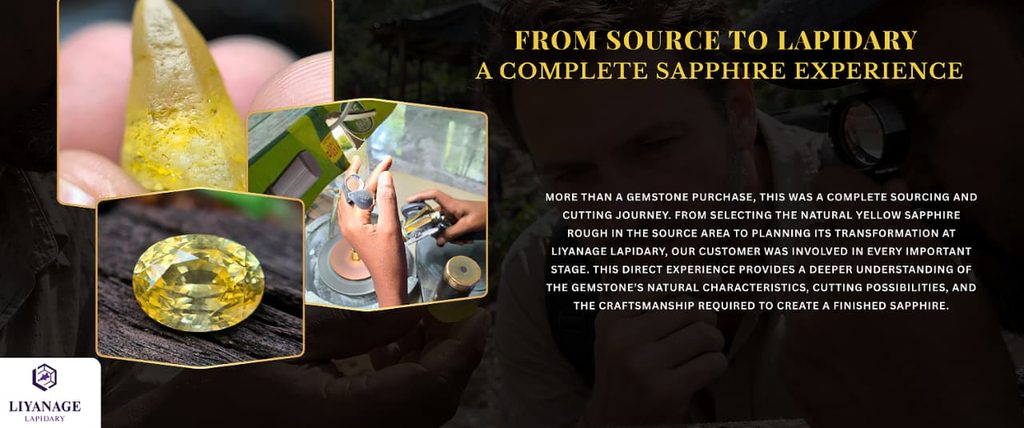
Rakwana is one of Sri Lanka’s known gemstone-producing areas, and stones from this region can show attractive natural colors and strong cutting potential. This yellow sapphire is a good example of why Sri Lankan source-area buying remains important for professional gemstone buyers. Direct sourcing allows buyers to understand the rough before cutting, and lapidary evaluation helps decide the best possible result from the material.
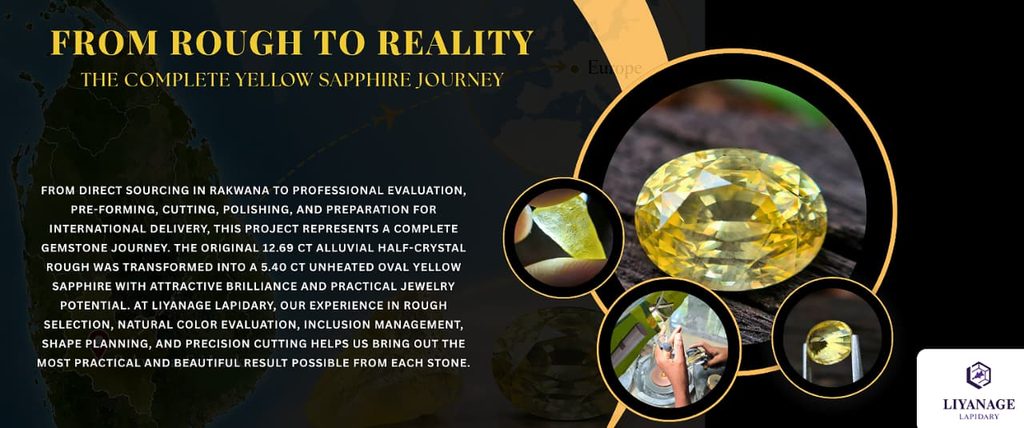
For the European customer, this was a complete gemstone journey: direct source purchase, professional evaluation, cutting discussion, pre-forming, final cutting, and preparation for international delivery. The rough that began as a 12.69 ct alluvial half-crystal yellow sapphire is now a 5.40 ct unheated oval yellow sapphire with nice brilliance and practical jewelry potential.
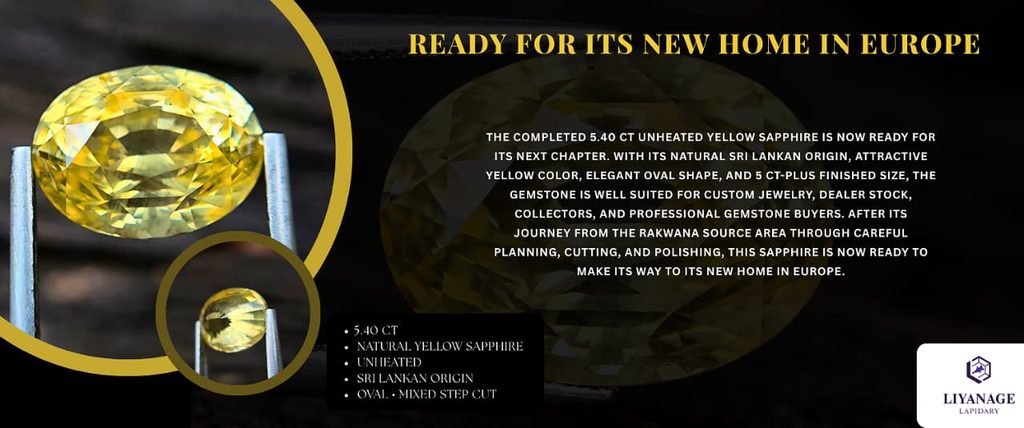
The finished gemstone is suitable for custom jewelry, dealer stock, collector selection, and professional gemstone buyers. Its unheated status, Sri Lankan origin, yellow color, oval shape, and 5 ct plus finished size make it a strong result from the original rough. It is now ready for its new home in Europe.
Liyanage Lapidary provides gemstone cutting, polishing, pre-forming, recutting, rough-to-finished transformation, and direct sourcing support from the gem island Sri Lanka. This Rakwana yellow sapphire journey reflects our practical experience in selecting rough, studying natural color, managing inclusions, choosing suitable shapes, and creating the most realistic professional result from each gemstone.
FAQ
1. Is this the same stone before and after cutting?
Yes. The rough yellow sapphire and the finished oval yellow sapphire are the same stone. The finished appearance changed after trimming, cutting, and polishing.
2. What was the original rough weight?
The original rough weighed 12.69 ct and measured 16.9 × 9.9 × 8.8 mm.
3. What is the final finished weight?
The finished yellow sapphire weighs 5.40 ct and measures 11 × 8.2 × 6.8 mm.
4. What was the cutting recovery percentage?
The cutting recovery was approximately 42.55%, from 12.69 ct rough to 5.40 ct finished gemstone.
5. Why was some material removed before cutting?
Some areas needed to be removed by grinding and pre-forming to improve the final shape, clarity, symmetry, and overall appearance.
6. Was this yellow sapphire heated?
No. The final gemstone was cut as an unheated yellow sapphire because the rough already showed natural yellow color.
7. Why was an oval shape selected?
The rough had a long natural form, and the oval shape allowed better weight retention, practical jewelry use, and a balanced face-up appearance.
8. Where was this yellow sapphire sourced?
It was sourced from Rakwana village around mining in Sri Lanka.
9. Is this gemstone suitable for jewelry?
Yes. The finished 5.40 ct oval yellow sapphire is suitable for rings, pendants, custom jewelry, dealer stock, and collector selections.
10. Does Liyanage Lapidary provide similar cutting and sourcing services?
Yes. Liyanage Lapidary provides direct sourcing support, gemstone cutting, polishing, pre-forming, and rough-to-finished transformation services for international buyers.