
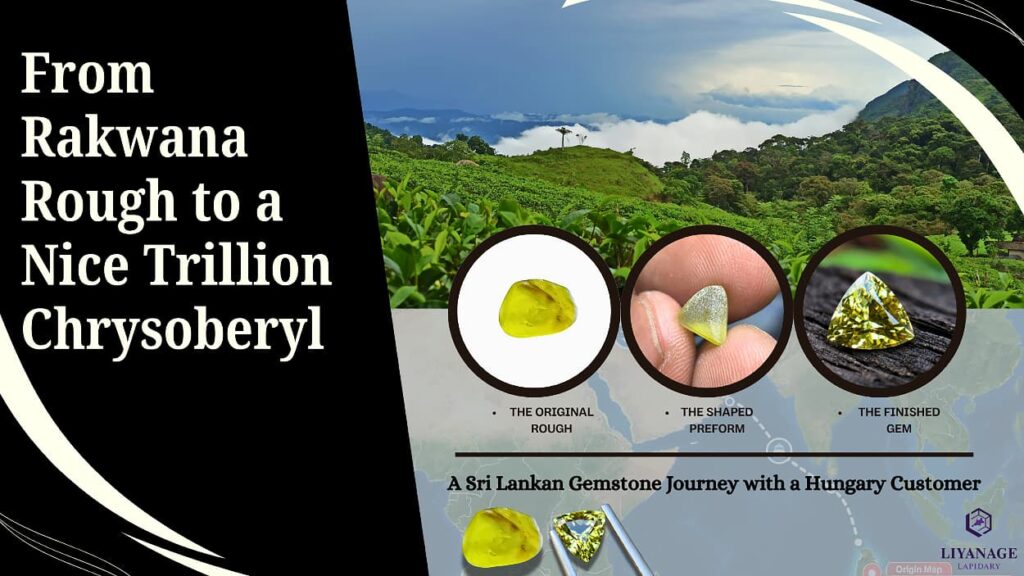
Sri Lanka continues to be one of the world’s most fascinating gemstone-producing countries, not only because of its long gem history, but also because of the direct source experience it offers to serious gemstone buyers. This chrysoberyl journey is a good example of how a stone can move from a challenging rough crystal to a bright finished gem through careful sourcing, realistic evaluation, and practical lapidary decisions. In this case, the story began in Rakwana, one of Sri Lanka’s respected gem-producing areas near the Sinharaja rainforest region, where misty mountain landscapes, traditional gem trading culture, and trusted local relationships still play an important role in gemstone buying.
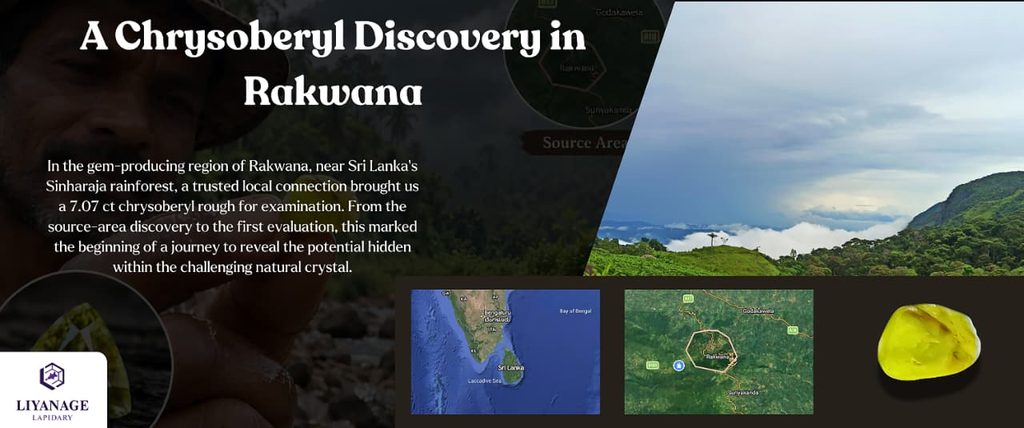
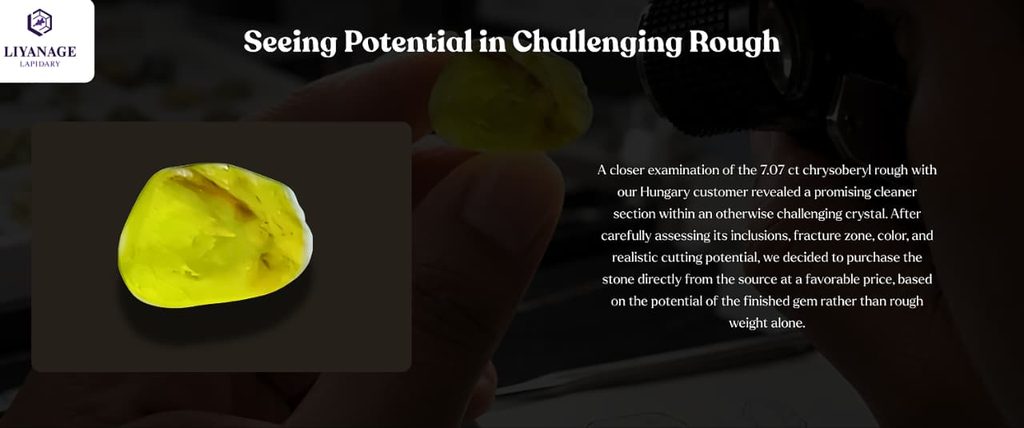
During a gemstone sourcing journey across Sri Lanka with a customer from Hungary, we traveled through several gem-producing regions including areas connected to the North Central, Southern, Eastern, Uva, and Sabaragamuwa provinces. Among these journeys, Rakwana stood out once again as an important source area. We are very familiar with this region and maintain direct relationships with miners and source-area dealers. Through one of these trusted local contacts, a chrysoberyl rough stone was brought to us for examination. The rough weighed 7.07 ct and showed attractive potential, even though it also contained visible inclusions and a strong fracture zone.
At first look, this was not a perfect piece of rough, and that is exactly why experience matters. Many rough stones do not look ideal in the beginning, but careful observation can reveal whether a usable and beautiful gem can still be produced. This chrysoberyl showed enough promising material in one area to justify buying it. Together with our Hungary customer, we examined the stone at the source and decided to purchase it at a good direct-source price. The decision was based not on the rough weight alone, but on whether the clean section could realistically produce a finished gemstone with good life, color, and market appeal.
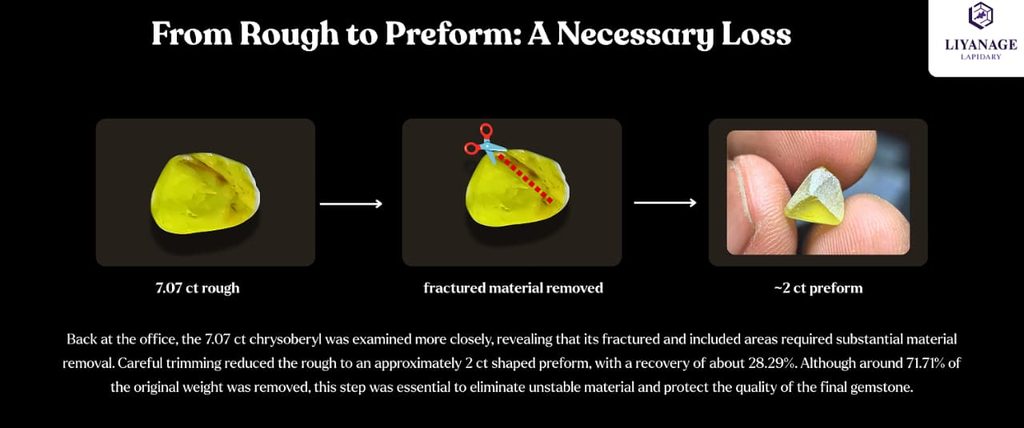
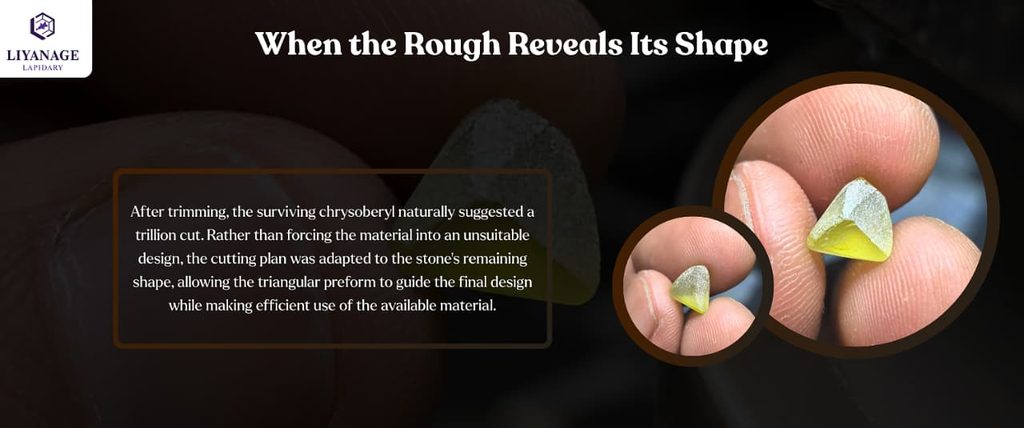
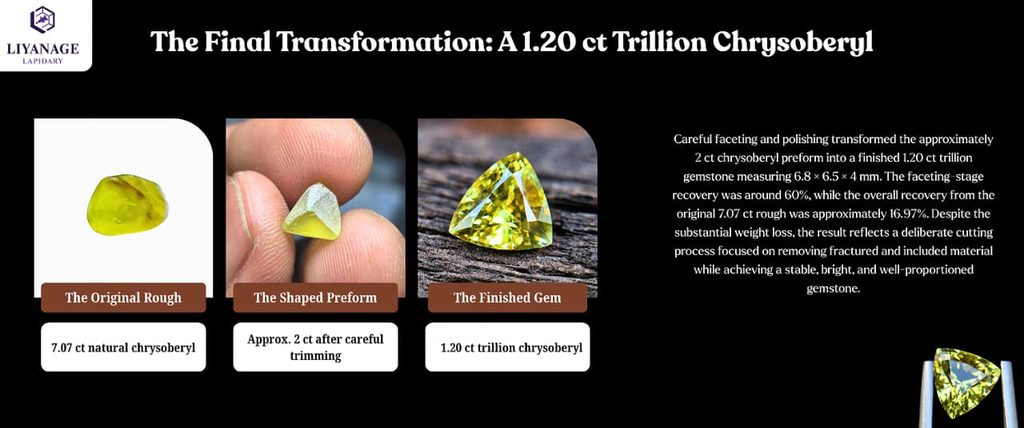
Back at the office, the rough was studied more carefully under better viewing conditions. The fractured area and included section made it clear that a large percentage of the material would need to be sacrificed. The first important step was trimming. By removing the heavily fractured and less usable areas, the rough was brought down to an approximate shaped preform of around 2 ct. This means the recovery from the original 7.07 ct rough to the preform stage was about 28.29%, with approximately 71.71% removed during trimming and shaping. Although this seems like a large loss, it was the necessary step to protect the quality and stability of the final gemstone.
After trimming, the remaining shape naturally suggested a trillion cut. This was an important lapidary moment, because rough should not be forced into an unsuitable shape. Instead, the cutter should read the stone and choose the design that best fits the surviving material. In this chrysoberyl, the post-trim outline favored a trillion form, and that shape also made good sense visually. Trillion cuts are often very attractive for chrysoberyl because they can deliver lively reflections, sharp brilliance, and a distinct face-up appearance while making good use of triangular or wedge-like preforms.
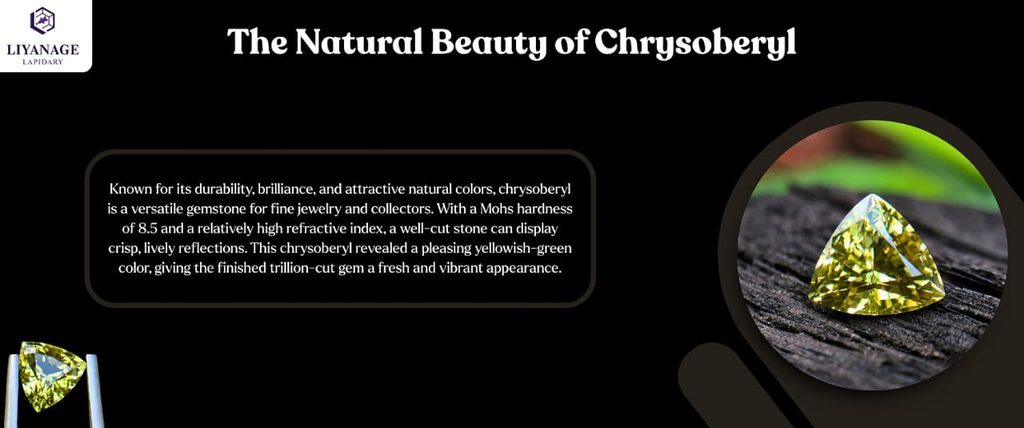
Chrysoberyl is an excellent gemstone for fine jewelry and collector interest. It belongs to the mineral species beryllium aluminum oxide (BeAl₂O₄) and is valued for its durability, brightness, and attractive natural colors. With a Mohs hardness of 8.5, chrysoberyl is a durable gemstone suitable for rings, pendants, and other jewelry applications. It also has a relatively high refractive index, which helps it produce a crisp and lively brilliance when well cut. In this stone, the final color appeared as a pleasing yellowish green, giving the finished gem a fresh and lively appearance rather than a dull or sleepy look.
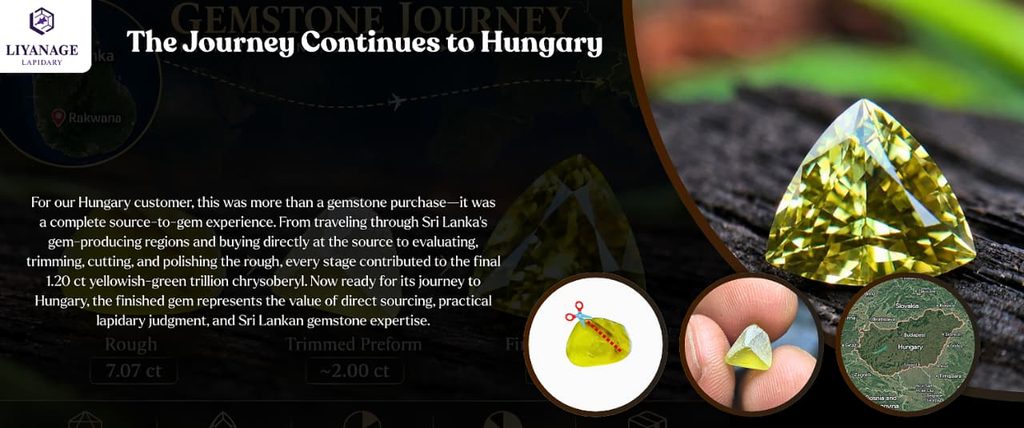
Faceting then moved forward with the goal of producing a clean, bright gemstone with balanced proportions. After careful cutting and polishing, the stone was finished as a 1.20 ct trillion chrysoberyl, measuring 6.8 × 6.5 × 4 mm. From the approximate 2 ct shaped preform to the final 1.20 ct gemstone, the recovery was around 60%, which is a practical result at the faceting stage. Looking at the full transformation from the original 7.07 ct rough to the final 1.20 ct gem, the total cutting recovery was about 16.97%, with a total weight loss of approximately 83.03%. While this is a low overall recovery, it is understandable and professionally acceptable considering the original fracture, inclusions, and the amount of rough that needed to be removed to produce a stable and attractive gemstone.
This journey also shows an important truth in gemstone cutting: success is not measured only by how much weight is saved. It is measured by the quality of the final gem. In this case, forcing the rough to retain more weight would likely have left serious issues in the stone or produced a less attractive shape. Instead, the practical choice was to remove the problematic areas, follow the natural orientation of the remaining material, and create a bright trillion chrysoberyl with much better overall appearance. That is why gemstone cutting is both technical and artistic. The final gem must balance weight, clarity, color, brilliance, and durability.
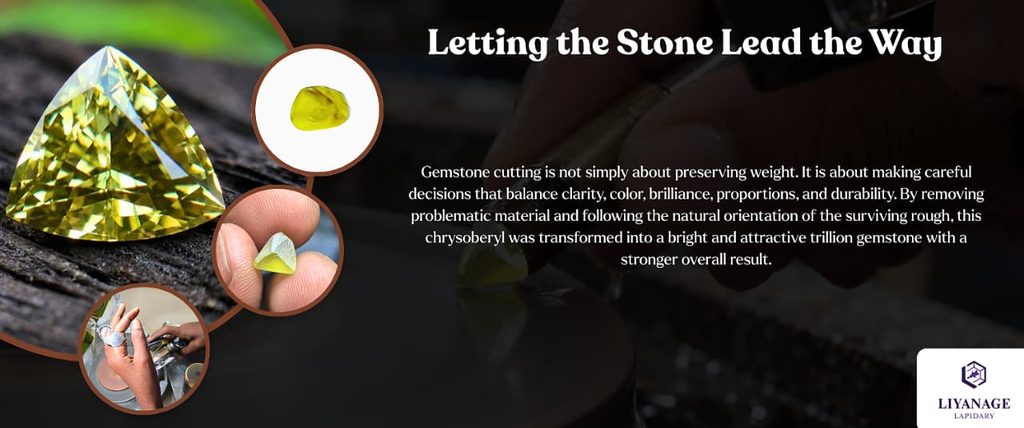
For the Hungary customer, this was more than just buying a stone. It was a complete Sri Lankan gemstone experience — traveling through real gem-producing regions, buying at the source, evaluating rough together, making trimming and cutting decisions, and then allowing the final faceting and polishing to be completed professionally before shipment to Europe. This kind of journey gives buyers a deeper understanding of how gemstones really move from rough material to finished pieces.
Now, the finished 1.20 ct yellowish green trillion chrysoberyl from Rakwana is ready for its next chapter in Hungary. It represents direct sourcing, realistic lapidary judgment, and the kind of gemstone journey that serious buyers value. For collectors, jewelers, and gemstone enthusiasts who want more than just a finished stone, this story shows how source knowledge and cutting experience can work together to produce a meaningful final result.
Liyanage Lapidary continues to support international buyers through direct gemstone sourcing, rough evaluation, trimming, cutting, polishing, and rough-to-finished transformation from Sri Lanka. For buyers who want to experience Sri Lanka beyond the showroom, gemstone travel and source-based buying can offer both knowledge and opportunity.
FAQ
1. What was the original rough weight of this chrysoberyl?
The original rough chrysoberyl weighed 7.07 ct.
2. What was the final finished weight?
The stone was finished as a 1.20 ct chrysoberyl.
3. What are the final measurements of the gemstone?
The finished gemstone measures 6.8 × 6.5 × 4 mm.
4. What shape was selected for the final gemstone?
After trimming and evaluation, the stone was cut into a trillion shape.
5. Why was so much weight lost during cutting?
The rough had inclusions and a strong fracture, so a large amount of material had to be removed to produce a cleaner, safer, and more attractive finished gem.
6. What was the approximate preform weight after trimming?
After the fractured and unsuitable areas were removed, the shaped preform was approximately 2 ct.
7. What was the total cutting recovery percentage?
The total recovery from 7.07 ct rough to 1.20 ct finished stone was approximately 16.97%.
8. Where was this chrysoberyl sourced?
It was sourced from Rakwana, Sri Lanka, a well-known gem-producing area near the Sinharaja rainforest region.
9. Why is chrysoberyl a good gemstone for jewelry?
Chrysoberyl is valued for its good durability, bright luster, and attractive brilliance. With a Mohs hardness of 8.5, it is suitable for many jewelry uses.
10. Was this gemstone part of a customer sourcing journey?
Yes. The stone was sourced during a Sri Lankan gemstone travel experience with a customer from Hungary, then evaluated, cut, and prepared for shipment to Europe.