
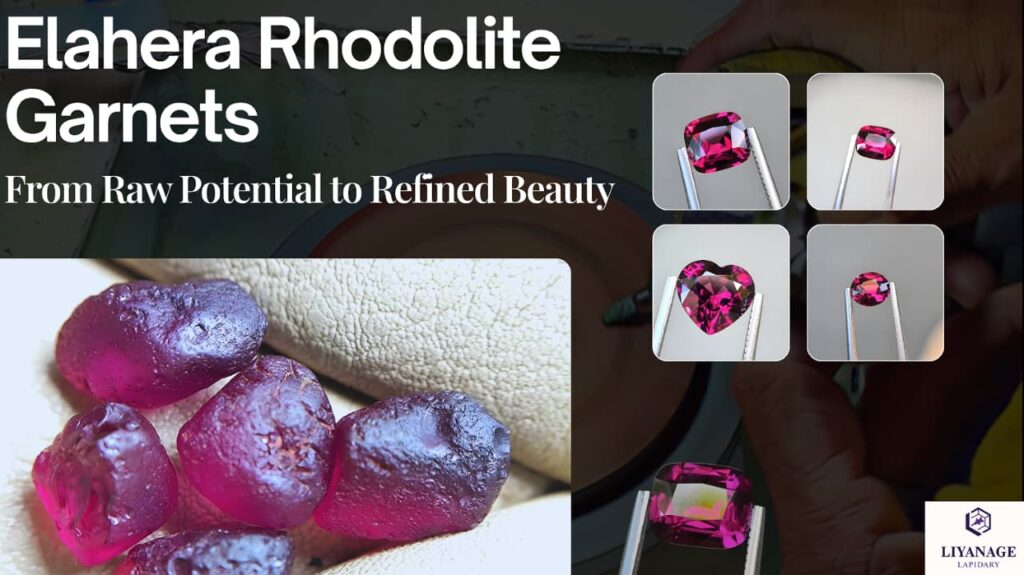
Sri Lanka, widely recognized as the gem island Sri Lanka, has produced gemstones for centuries through its rich alluvial deposits. Among its lesser-highlighted but commercially important materials are Elahera rhodolite garnets, sourced from Elahera village around mining in Sri Lanka. These stones are valued in the trade for their natural reddish-pink to purplish tones, consistent structure, and suitability for faceting.
This article presents a real lapidary case study, following a parcel of natural, unheated rhodolite garnets from rough form to finished gemstones. It highlights the relationship between expected yield, actual results, and the practical decisions made during cutting.
Origin and Material Characteristics
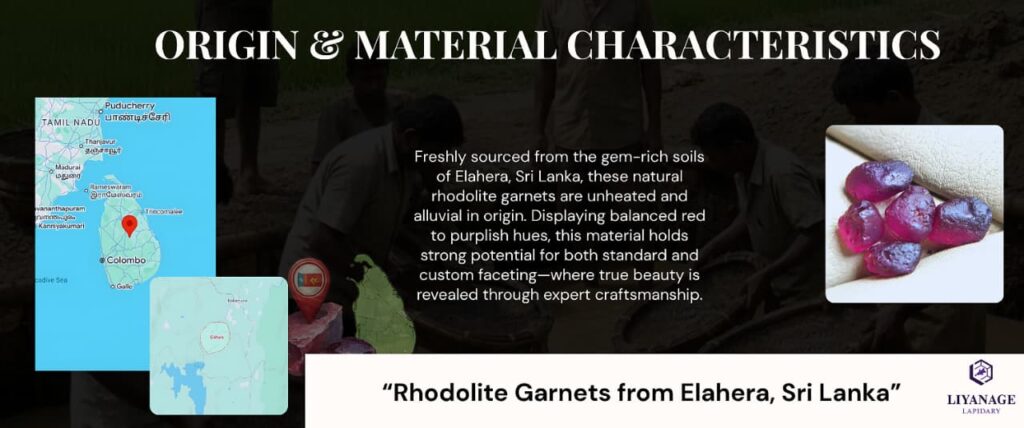
These rhodolite garnets were obtained fresh from mining in Elahera, Sri Lanka, giving them strong origin value and direct traceability. Known in the trade as Elahera garnet, this material is:
Natural and unheated
Alluvial in origin
Typically showing balanced red to purplish tones
Suitable for standard and custom faceting
Fresh mining material often appears promising externally, but its internal structure can only be fully understood after detailed examination. This is where lapidary experience becomes critical.
Pre-Cutting Expectations vs Reality
Before cutting, each rough stone was assessed and given an estimated yield range based on size, shape, and visible characteristics. However, these expectations are always preliminary.
Rough to Finished Results:
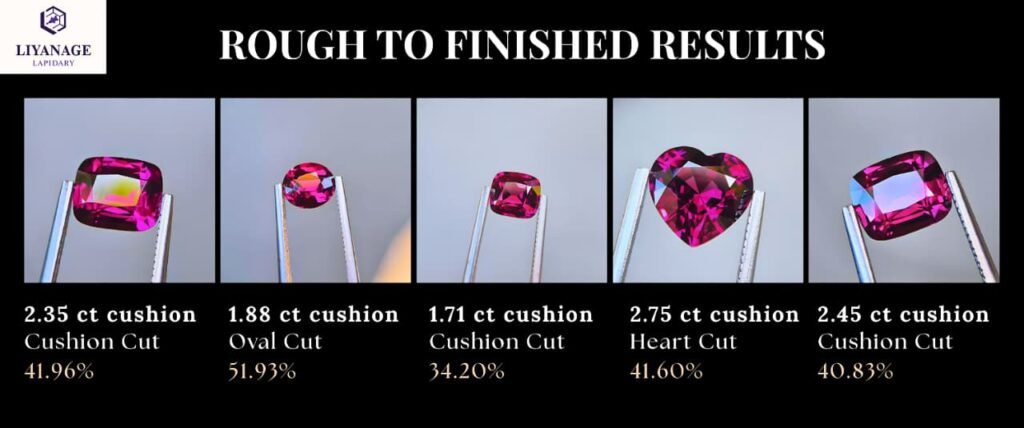
5.60 ct → 2.35 ct cushion (41.96%)
6.00 ct → 2.45 ct cushion (40.83%)
6.61 ct → 2.75 ct heart (41.60%)
5.00 ct → 1.71 ct cushion (34.20%)
3.62 ct → 1.88 ct Oval (51.93%)
Total Overview:
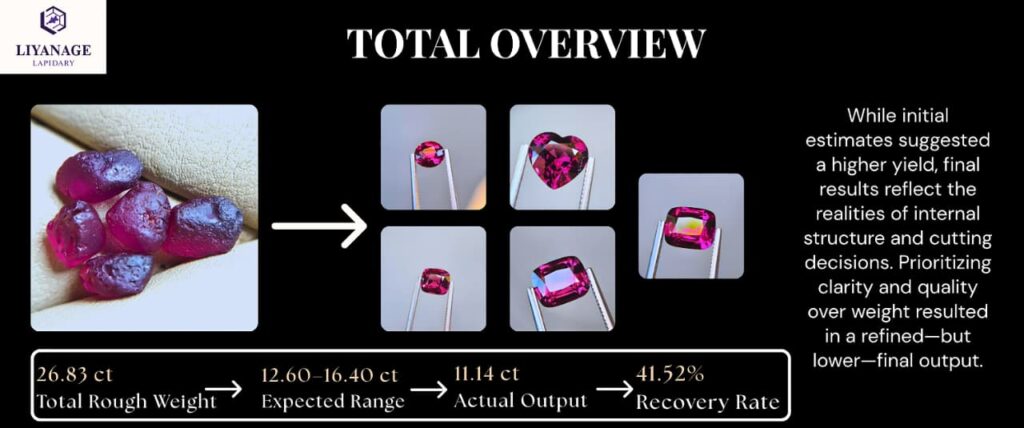
Total Rough Weight: 26.83 ct
Expected Finished Range: 12.60–16.40 ct
Actual Finished Weight: 11.14 ct
Overall Recovery: ~41.52%
The final result came 1.46 ct below the minimum expected range, which is not unusual in practical lapidary work when quality is prioritized over weight.
Why the Expected Yield Changed
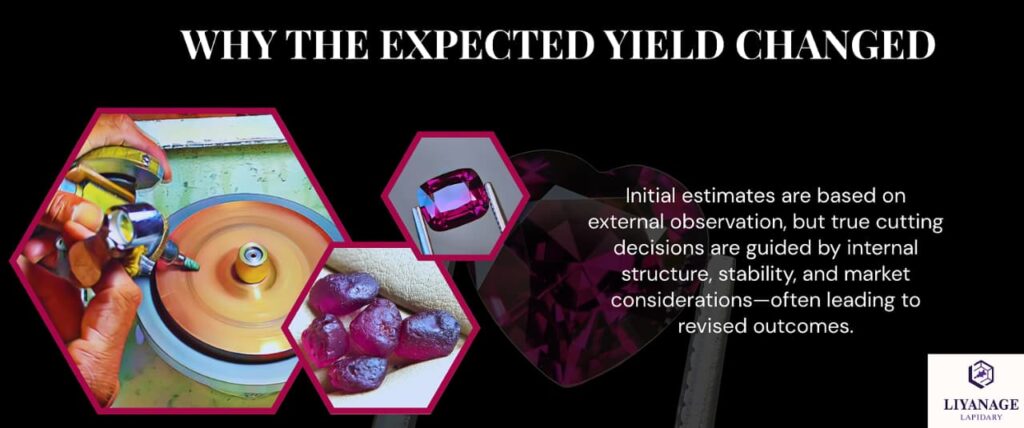
One key factor in this parcel was that cutting shapes were adjusted after closer examination of the rough. Initial estimates are made based on external observation, but once the cutter studies the internal structure more deeply, decisions often change.
These adjustments were influenced by:
– Internal inclusions and fractures
– Structural weaknesses
– Market-friendly shape selection
Because of this, the original expected yield should not be treated as a fixed target. It is only a starting reference before real cutting decisions are made.
Lapidary Decision-Making: Beauty vs Weight
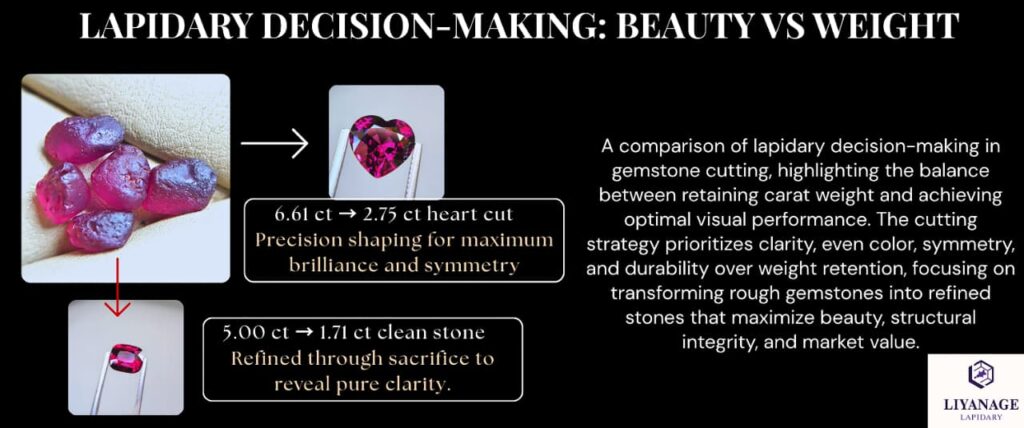
In gemstone cutting, there is always a balance between retaining weight and achieving visual performance. In this case, the cutting strategy clearly prioritized:
– Clean clarity
– Strong and even color
– Symmetrical and marketable shapes
– Stability and durability of the finished stone
For example, the 6.61 ct rough was cut into a 2.75 ct heart shape. Heart cuts naturally reduce yield due to symmetry requirements, but they offer strong visual appeal when executed correctly.
Similarly, the 5.00 ct rough yielding only 1.71 ct suggests internal challenges such as inclusions or structural weaknesses, requiring additional removal to achieve a clean final stone.
Performance Analysis by Stone
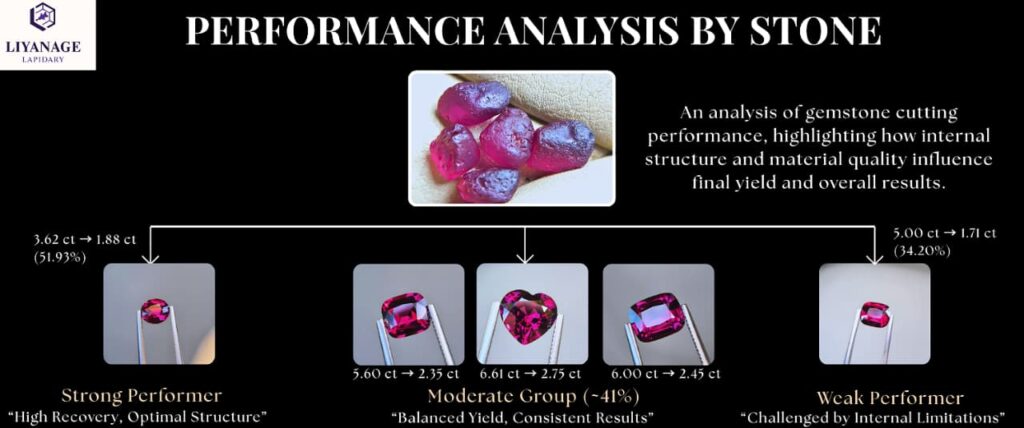
Strong Performer
3.62 ct → 1.88 ct (51.93%)
This stone showed excellent recovery, indicating good internal structure and proper orientation.
Moderate Group (~41%)
5.60 ct → 2.35 ct
6.00 ct → 2.45 ct
6.61 ct → 2.75 ct
These stones performed consistently, suggesting moderate internal limitations but overall good cutting outcomes.
Weak Performer
5.00 ct → 1.71 ct (34.20%)
This indicates hidden internal issues that required significant material removal.
Sri Lankan Lapidary Practice and Technique
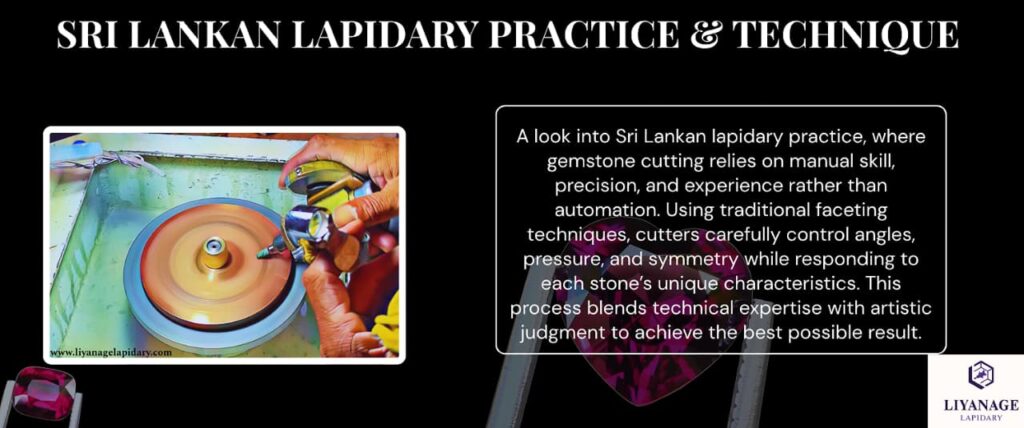
Unlike automated systems, Sri Lankan lapidary work depends heavily on manual control and practical skill. Using traditional faceting machines, cutters must:
Maintain precise angle control manually
Adjust pressure and alignment during cutting
Balance polishing and facet symmetry
Work patiently through multiple stages
This process is not only technical but also requires a developed sense of the stone—understanding how it reacts during cutting, how color behaves, and how to balance proportions.
At Liyanage Lapidary, cutting is approached as a combination of technical execution and artistic judgment, ensuring that each stone reaches its best possible outcome.
Final Evaluation
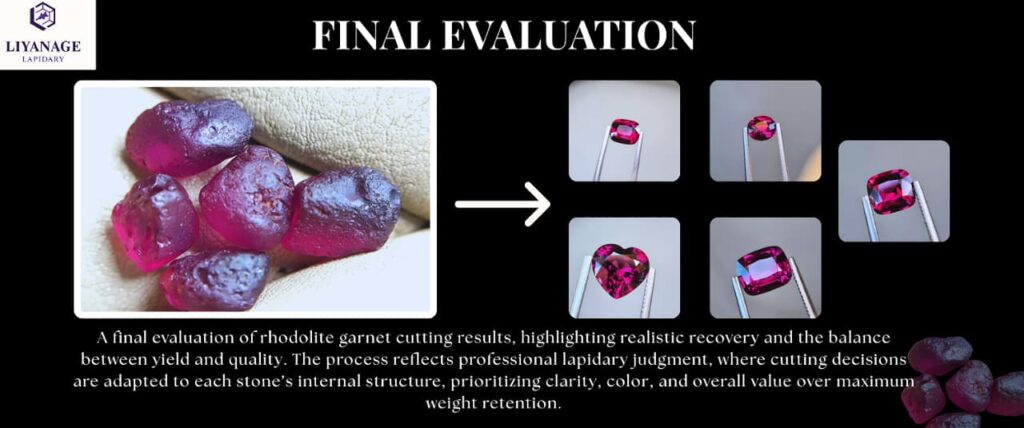
These Elahera rhodolite garnets demonstrate a realistic cutting scenario:
Moderate overall recovery (~41%)
Slightly below initial expectation
Strong emphasis on quality over weight
Honest adaptation of cutting plans based on internal structure
This reflects professional lapidary decision-making, where the final gemstone is optimized for real-world value rather than theoretical yield.
Conclusion
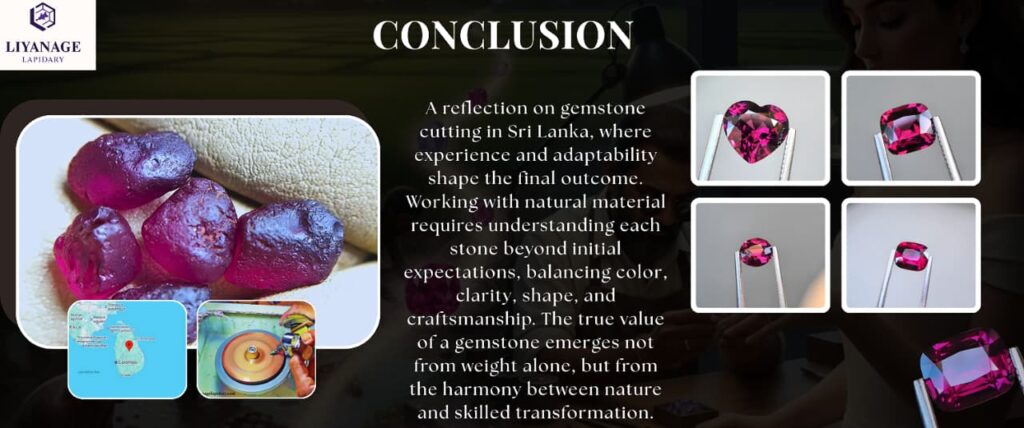
Working with fresh mining material from Elahera requires both experience and flexibility. Initial expectations are only guidelines. The true outcome depends on how well the cutter understands the internal characteristics of each stone.
This case highlights an important principle in the gemstone trade:
The value of a gemstone is not defined by weight alone, but by the balance of color, clarity, shape, and craftsmanship.
At Liyanage Lapidary, every stone is treated with this understanding—ensuring that the final product represents both the natural beauty of Sri Lankan gemstones and the skill behind their transformation.
FAQ
Are these rhodolite garnets natural?
Yes, all stones are natural and sourced directly from Elahera village around mining in Sri Lanka.
Have these gemstones been treated?
No, these garnets are completely unheated and untreated.
Why did the final weight differ from the expected range?
The cutting shapes were adjusted after examining the internal structure of the rough, which required additional material removal for better quality.
Is a 40% recovery normal in garnet cutting?
Yes, depending on the rough quality, internal features, and chosen shape, recovery can vary between 30% and 60%.
Can these stones be used for jewelry?
Yes, rhodolite garnets are suitable for rings, pendants, and other jewelry due to their durability and color.