
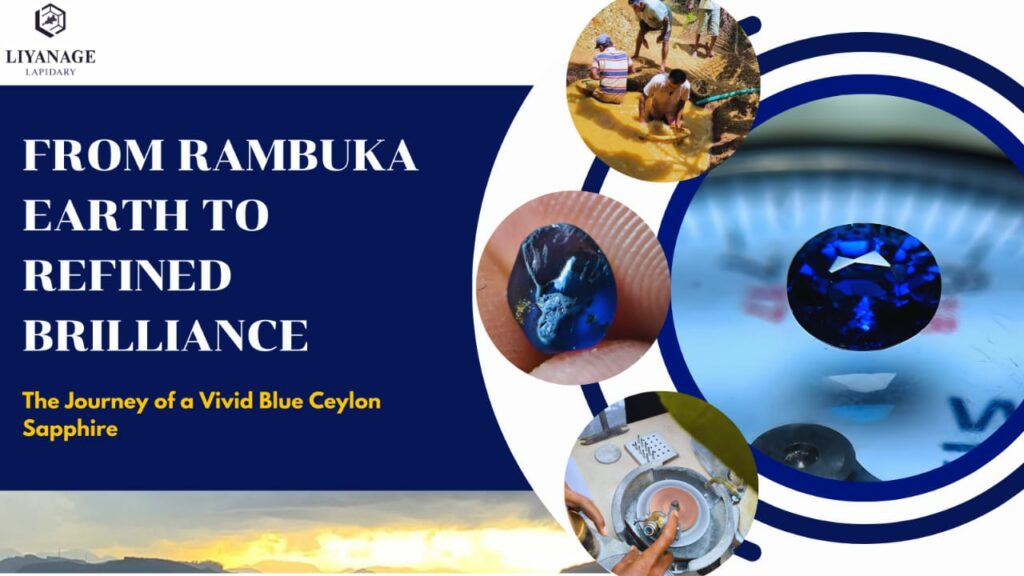
In the gemstone world, certain locations quietly build a reputation among professionals for producing stones with unique personality. One such place is the Rambuka village around mining in Sri Lanka, an area known among miners and dealers for yielding sapphires with distinctive tones and occasional flashes of unusually vivid blue. While many stones from this region show softer or slightly greenish blue hues, every now and then the earth reveals something special — a sapphire with a deeper, more intense color that immediately captures attention.
This story follows one such gemstone, a natural unheated Rambuka blue sapphire, beginning as a small rough crystal measuring 6.5 × 5.2 × 3.4 mm and eventually becoming a carefully cut oval step-cut sapphire measuring 5 × 4.2 × 3.2 mm.
Discovery from the Rambuka Mining Fields
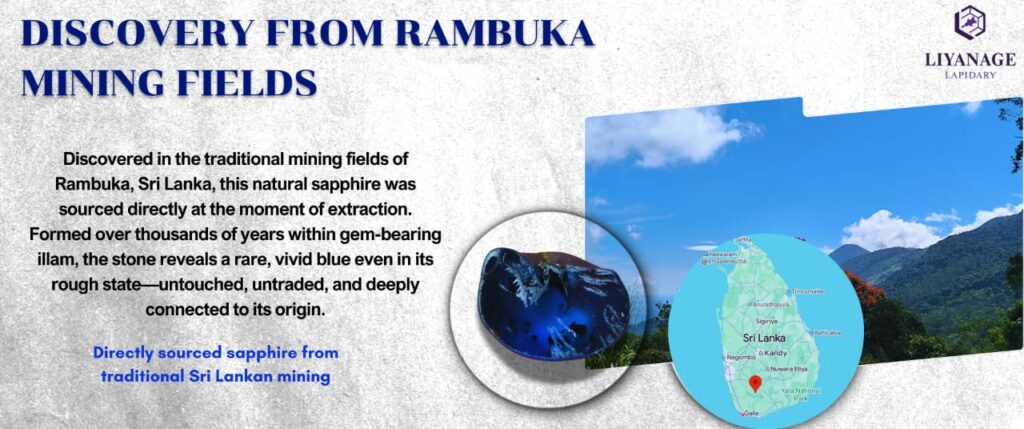
The sapphire originated directly from the Rambuka village around mining in Sri Lanka, an area where mining is still carried out using traditional methods. Local miners work through layers of gravel and clay in search of the gem-bearing earth known locally as illam. These deposits form over thousands of years through natural geological processes, where gemstones from the surrounding hills gradually move into riverbeds and sediment layers.
What makes this stone particularly meaningful is its direct sourcing. The rough sapphire was obtained immediately after extraction, fresh from the ground and not passed through multiple dealers. In the gemstone trade, this direct connection to the mining community provides a clearer understanding of origin and treatment history.
At first glance, the crystal showed a vivid and saturated blue color, uncommon for many Rambuka stones. Even in its natural rough form, the color appeared strong and evenly present within the body of the crystal.
Evaluating the Rough Sapphire
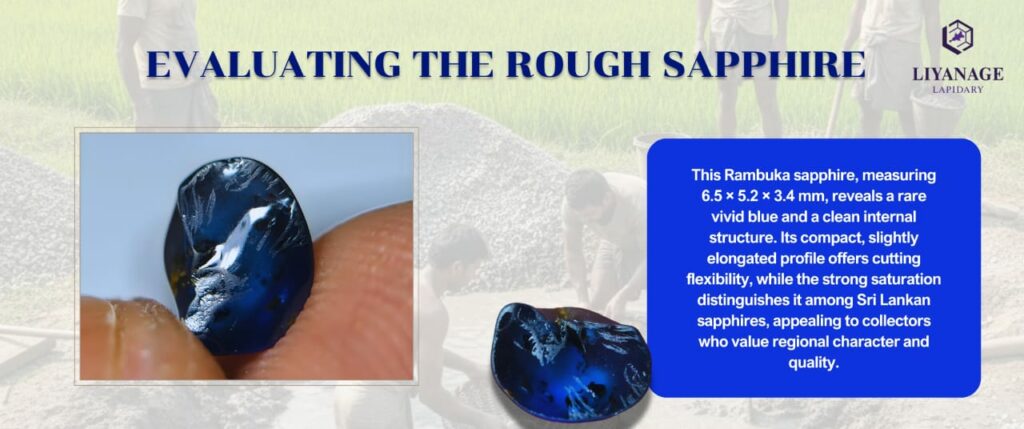
When professionals examine sapphire rough for cutting, they focus on several key elements: color concentration, internal structure, orientation possibilities, and expected yield.
The original crystal measured 6.5 × 5.2 × 3.4 mm, showing a slightly elongated profile with moderate depth. Despite its compact size, the crystal displayed a relatively clean internal structure, giving the cutter flexibility when deciding how to orient the stone.
The most striking feature was the natural vivid blue hue. Color remains the most important factor in sapphire evaluation, and stones from Rambuka often show softer or mixed tones. In this particular piece, however, the saturation appeared unusually strong for the area.
This made the stone especially interesting to collectors who appreciate distinct regional characteristics in Sri Lankan sapphires.
Customer Request: Preserving Color and Character
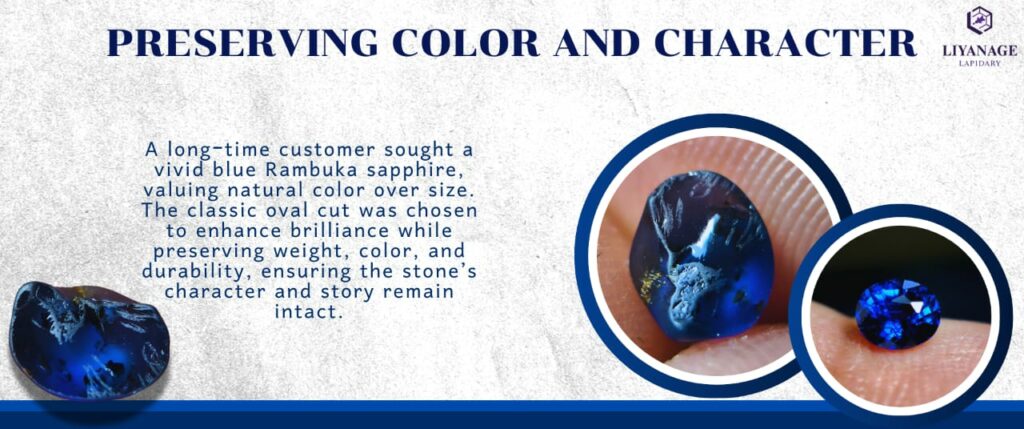
This sapphire also carries a personal story. A long-time customer had been searching specifically for a Rambuka sapphire with an intense vivid blue tone.
Even though the crystal was not large, its color and origin made it very appealing. Experienced buyers often prioritize natural color quality over size, particularly when the stone remains untreated.
After reviewing the rough, the customer requested a classic oval shape, a cut known for balancing brilliance and color concentration.
At the same time, the cutter was asked to maintain a careful balance between:
* Preserving the sapphire’s natural weight
* Enhancing the face-up color
* Ensuring stable proportions for long-term durability
The Cutting Process
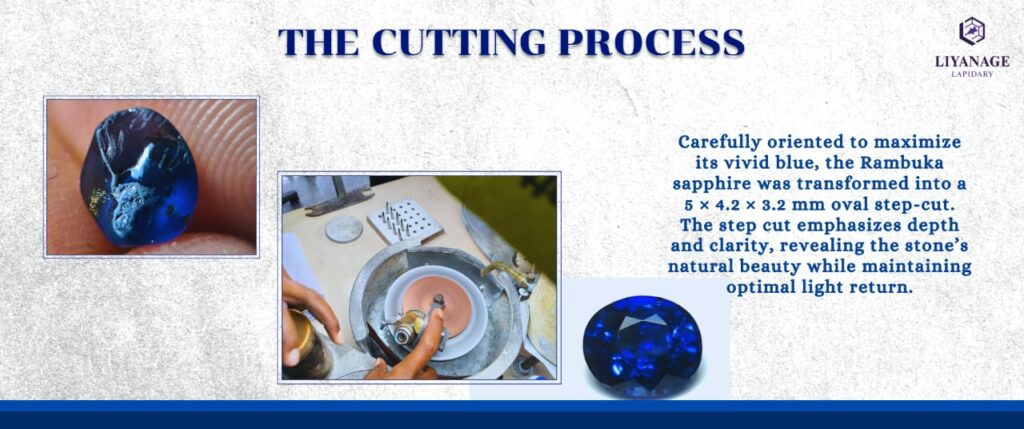
Cutting sapphire is a process that requires patience and technical understanding. Before the first facet is cut, the lapidary carefully studies the crystal to determine the best orientation.
Sapphire crystals often show pleochroism, meaning different directions within the crystal can display slightly different shades of blue. Proper orientation ensures the strongest and most desirable color faces upward once the stone is finished.
In this case, the cutter positioned the stone to maximize the deep vivid blue face-up appearance, while maintaining good light return.
After shaping and faceting, the stone was transformed into a finished oval step-cut sapphire measuring 5 × 4.2 × 3.2 mm.
Step cutting highlights the internal beauty of the stone by emphasizing depth and clarity rather than intense sparkle.
The Result: A Small Stone with Exceptional Character
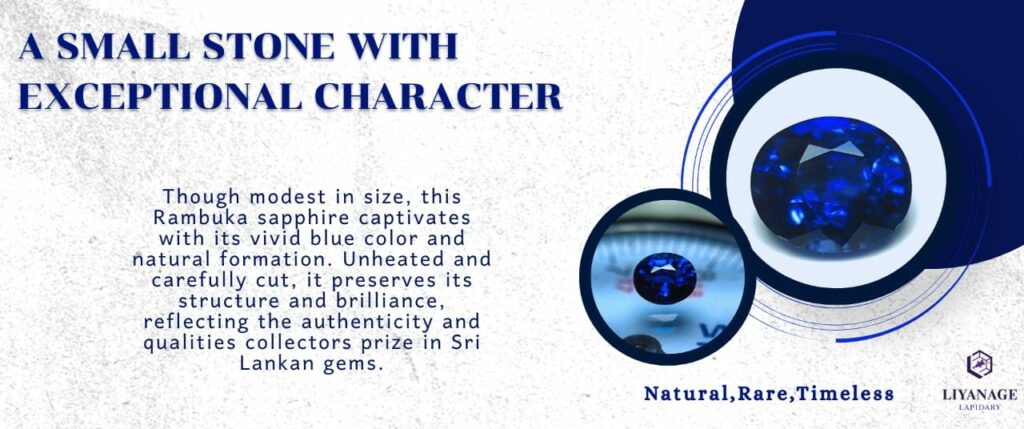
Although modest in size, the finished sapphire displays strong color presence and excellent visual balance. The vivid blue tone remains the defining feature of the gem.
The stone is also completely unheated, which is important for collectors who value natural gemstone formation. While heat treatment is widely accepted in the sapphire industry, stones with attractive natural color are appreciated for their authenticity.
This sapphire reflects several qualities associated with Sri Lankan gems:
* Natural geological formation
* Direct sourcing from mining communities
* Careful cutting orientation
* Balanced color and structure
Rambuka’s Unique Place in Sri Lanka’s Gem Heritage
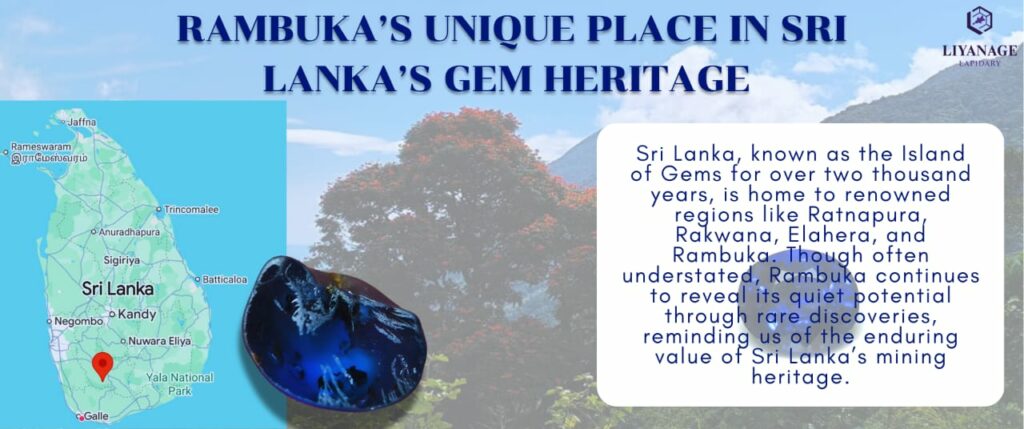
Sri Lanka has been known for gemstones for more than two thousand years and is often referred to as the Island of Gems. Regions such as Ratnapura, Rakwana, Elahera, and Rambuka contribute to this long history.
Among these locations, Rambuka remains somewhat understated. While not every stone from the area shows intense color, occasional discoveries like this sapphire highlight the unique potential of the region.
These stones remind collectors and professionals why Sri Lankan mining villages continue to be valued sources of natural gemstones.
A Gemstone with a Story
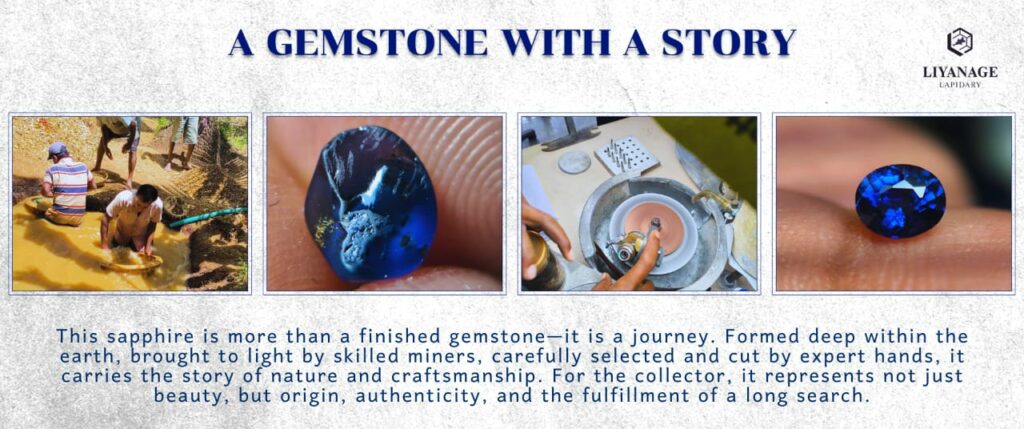
Beyond its gemological characteristics, this sapphire represents the connection between nature, miner, cutter, and collector.
It began deep within the geological layers of Sri Lanka, was carefully extracted by local miners, obtained directly from the source, evaluated for its natural color, and then skillfully cut to reveal its beauty.
The final gemstone is more than just a polished mineral. It is the result of nature’s formation and human craftsmanship working together.
For the customer who had long hoped to find a Rambuka sapphire with this vivid blue character, the journey ended with exactly what they envisioned: a natural, unheated Ceylon sapphire carrying both color and origin within its crystal structure.
Frequently Asked Questions (FAQ)
Is Rambuka a well-known source for blue sapphires?
Yes. Rambuka village around mining in Sri Lanka is known among local miners and dealers for producing sapphires with unique blue tones. While not as famous as Ratnapura, it occasionally yields stones with distinctive vivid color.
Is this sapphire treated or heated?
No. This sapphire is completely unheated and untreated, meaning the color formed naturally within the crystal during geological formation.
Why was an oval step cut chosen for this stone?
The oval step cut allows the cutter to maintain balanced proportions while preserving the stone’s natural color concentration. It also helps maximize weight retention from the original rough.
How much weight was lost during cutting?
The rough sapphire measured 6.5 × 5.2 × 3.4 mm, and after careful cutting the finished gem measures 5 × 4.2 × 3.2 mm. Some weight loss is normal during faceting as the cutter removes irregular surfaces and optimizes the stone’s proportions.
Why are unheated sapphires valued by collectors?
Unheated sapphires retain their natural color and internal features exactly as they formed in nature. Many collectors and gem professionals prefer untreated stones because they represent the gemstone in its most authentic state.