
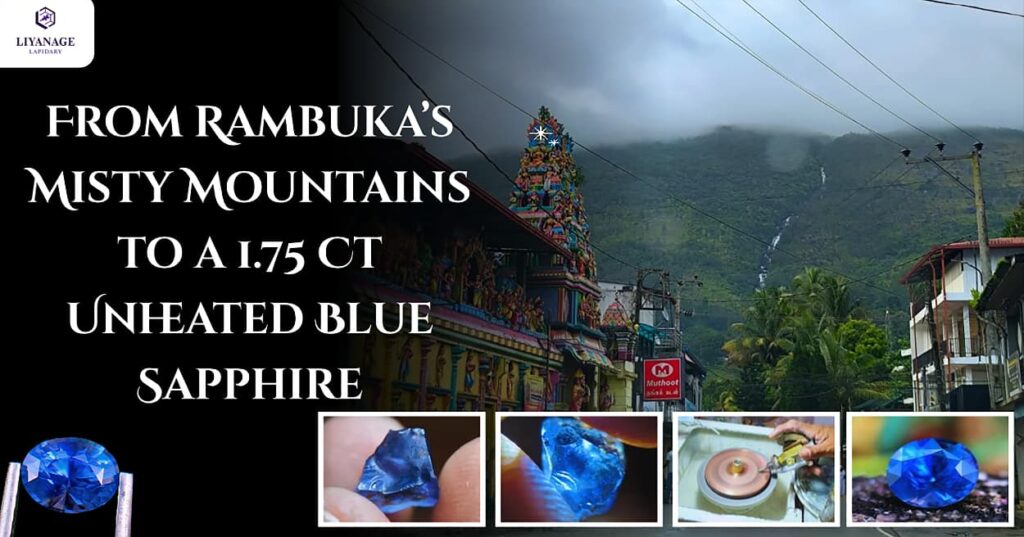
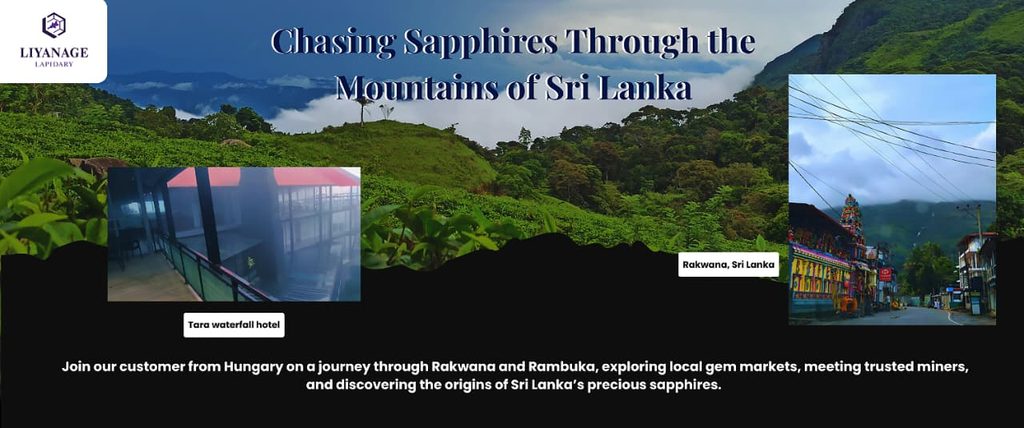
This blue sapphire journey started during a Sri Lankan gem source travelling experience with our customer from Hungary. Early in the morning, we travelled through Rakwana, one of the beautiful gem-connected mountain areas in Sabaragamuwa Province. It was a rainy day, with mist covering the mountain road, waterfalls in the distance, and a natural atmosphere that made the journey feel very close to Sri Lanka’s gemstone country.
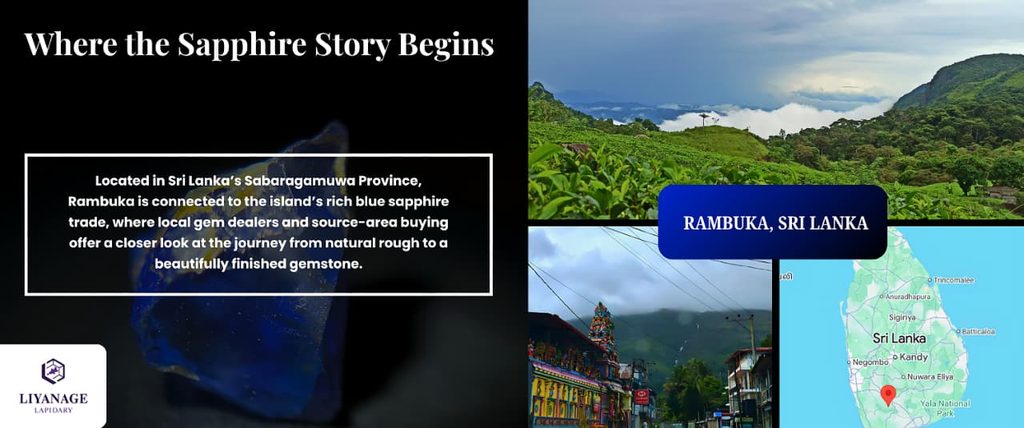
We spent a few hours around the Rakwana gem market, meeting local dealers, checking several stones, and making some good source-area deals. After that, we travelled together to Tara Waterfall Hotel, located between Rambuka and Rakwana. This area is surrounded by mountain views, forest atmosphere, rain, mist, and traditional gem villages. For many international gemstone buyers, this kind of journey gives a real understanding of how Sri Lankan gemstones move from source areas to the lapidary table.
In the evening, while heavy rain and mist covered the area, we continued the gem hunting journey toward Rambuka. We stopped near Rajawatta Junction and met direct miners and local source dealers. We checked several stones and continued discussing quality, cutting potential, transparency, color, and price. Later that night, on the way back, we met one of our long-term mining contacts. We have known this miner for many years and have bought stones from him from time to time, so there was already trust and familiarity.
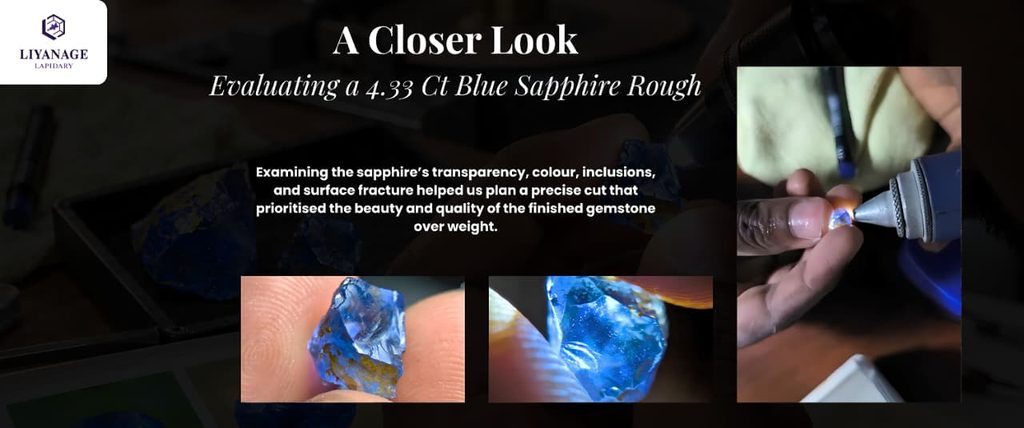
That night, we visited his home, and he showed us a freshly found blue sapphire rough from Rambuka. This was not a stone that had passed through many hands. It was a fresh source-area rough, directly connected to the miner and the locality. The rough weighed 4.33 ct and measured 8.8 × 6.6 × 6 mm. It was an unheated facet-grade blue sapphire rough with an excellent transparent body and a very attractive blue color.
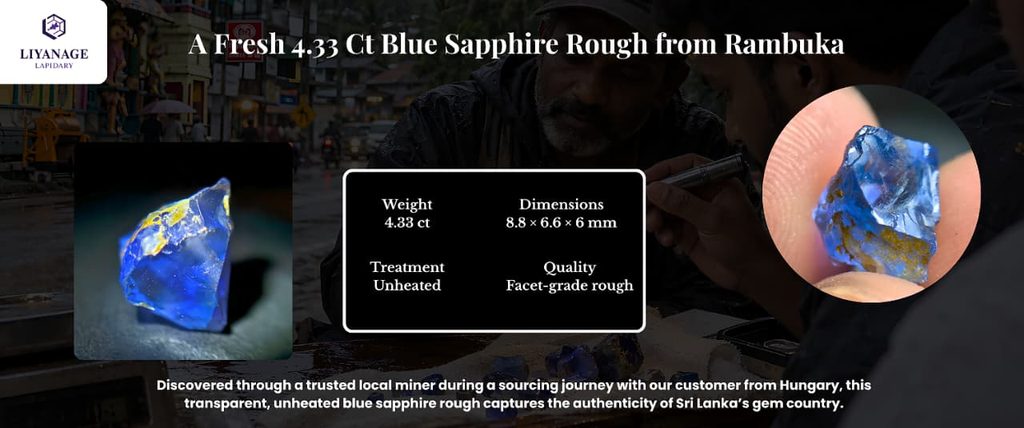
Both our Hungary customer and Liyanage Lapidary were interested in buying this stone. However, because the customer was travelling with us through Sri Lanka and experiencing the gemstone sourcing journey directly, we decided to give him the chance to purchase it. It made the journey more meaningful: a fresh Rambuka blue sapphire rough, found during the trip, checked together at night, purchased from a trusted miner, and later planned for cutting with Liyanage Lapidary.
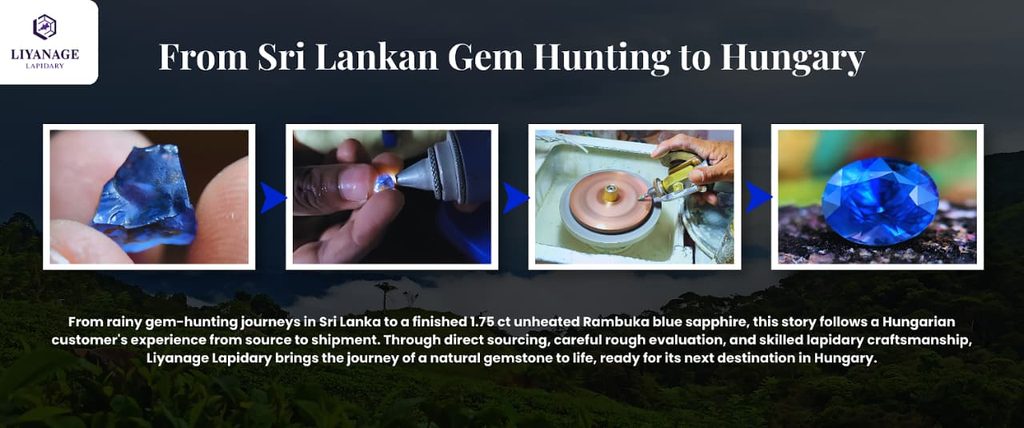
After purchasing the stone, we brought it to one of our offices in Rakwana for closer examination. Under light, the stone showed very good transparency and a strong glassy body. The blue color was attractive, and the rough had clear potential for a fine finished sapphire. At the same time, there were some inclusions and surface-related issues that needed careful attention. One main fracture was close to the surface, and removing that area became an important part of the cutting decision.
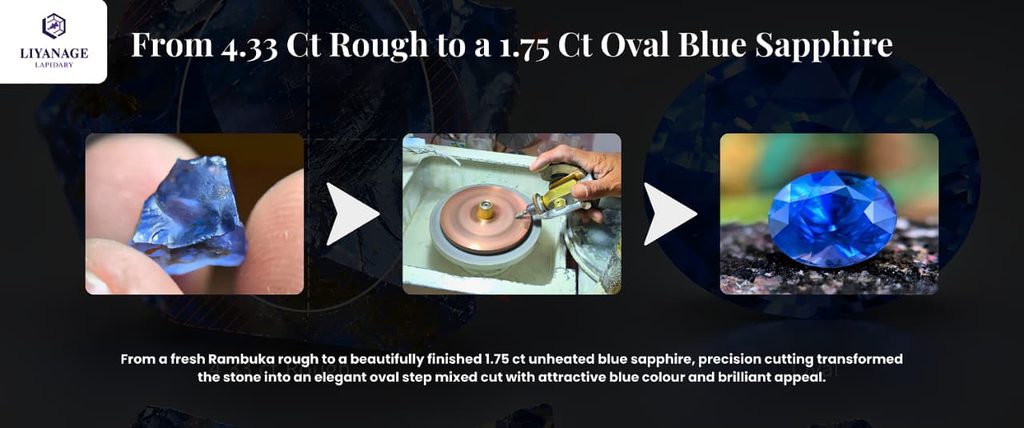
Gemstone cutting is not only about keeping weight. The cutter must study the rough body, color direction, inclusion placement, fracture position, shape possibility, and final face-up beauty. In this case, we decided to remove unnecessary material and completely remove the main surface fracture. This reduced weight, but it helped create a cleaner, stronger, and more professional finished gemstone.
We discussed the stone carefully with the cutter and finalized an oval direction. The original rough shape, depth, and color orientation supported an oval design. A step mixed cut was selected to give the stone a structured look while maintaining life, brilliance, and a clean face-up appearance. This style helped the finished sapphire keep good depth and show the blue color nicely.
After trimming, shaping, faceting, and polishing, the rough transformed into a beautiful 1.75 ct unheated blue sapphire measuring 7.7 × 6 × 5 mm. The finished gemstone has an oval shape with a step mixed cut, showing attractive blue color, good brilliance, and a professional final appearance. From a fresh Rambuka rough to a finished gemstone, this was a complete source-to-cut journey.
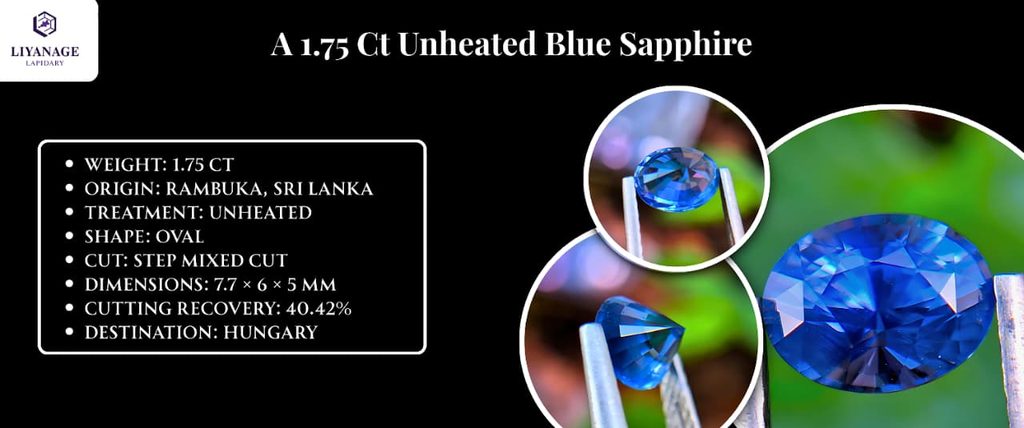
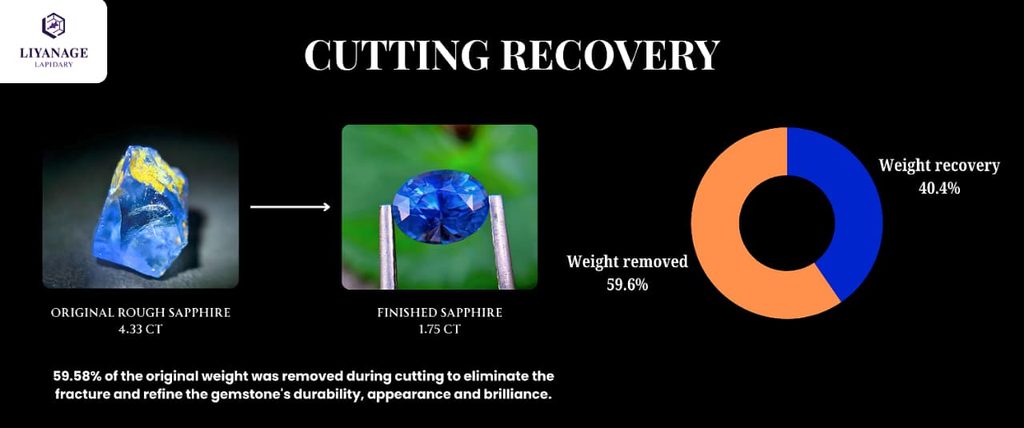
The cutting recovery was approximately 40.42%. This means the original 4.33 ct rough produced a 1.75 ct finished sapphire, with around 59.58% material loss during trimming, fracture removal, shaping, faceting, and polishing. For a rough sapphire with inclusions and a surface-near fracture that needed full removal, this is a practical and professional recovery result. The priority was not only maximum weight retention, but also better durability, clean appearance, color presentation, and market-ready beauty.
Rambuka is known as one of the respected blue sapphire source areas connected to Sri Lanka’s Sabaragamuwa gem region. Stones from this area can show strong blue color, good transparency, and attractive cutting potential. This particular stone is a good example of why source-area buying is valuable: the buyer can see the rough, understand the origin story, meet people connected to the stone, and follow the cutting decision from the beginning.
For our Hungary customer, this was more than a gemstone purchase. It was a full Sri Lankan gem experience: misty mountain roads, rainy source-area travel, Rakwana gem market, Rambuka evening gem hunting, meeting direct miners, checking a fresh rough sapphire at night, planning the cut, removing problem areas, and finally creating a finished unheated blue sapphire ready for international shipping.
This journey also shows the role of Liyanage Lapidary as a practical gemstone partner for international buyers. We help with direct sourcing, rough evaluation, cutting decisions, pre-forming, faceting, polishing, and final supply. Every rough stone has its own challenges, and the best result comes from careful study, clear communication, and realistic lapidary work.
The final result is a 1.75 ct unheated Rambuka blue sapphire, cut from a 4.33 ct fresh rough stone, with a professional step mixed oval cut and a meaningful source-to-finished story. Now, this sapphire is ready to ship to Hungary, carrying not only color and brilliance, but also the full journey of Sri Lankan gem hunting, trusted source connection, and skilled lapidary transformation.
Liyanage Lapidary continues to support gem dealers, collectors, jewelers, custom jewelry manufacturers, and international gemstone buyers who want more than just a finished stone. For buyers who want to understand Sri Lankan gemstones from source to cut, this Rambuka blue sapphire journey is a strong example of real sourcing, real lapidary work, and professional international gemstone supply.
FAQ
1. Is this the same stone before and after cutting?
Yes. The 4.33 ct blue sapphire rough and the 1.75 ct finished blue sapphire are the same stone.
2. Where was the rough sapphire sourced?
The rough sapphire was sourced from Rambuka, Sri Lanka, during a gem hunting journey with a customer from Hungary.
3. What was the original rough weight?
The original rough weighed 4.33 ct and measured 8.8 × 6.6 × 6 mm.
4. What is the final finished weight?
The finished sapphire weighs 1.75 ct and measures 7.7 × 6 × 5 mm.
5. What was the cutting recovery percentage?
The cutting recovery was approximately 40.42%, with about 59.58% material loss during cutting and polishing.
6. Why was material removed during cutting?
Some unnecessary material, inclusions, and one main surface-near fracture were removed to improve the final clarity, strength, and appearance.
7. Is this sapphire heated?
No. This sapphire is described as unheated.
8. What cut was selected for the final stone?
The stone was finished as an oval shape with a step mixed cut.
9. Is Rambuka known for blue sapphires?
Rambuka is connected to Sri Lanka’s Sabaragamuwa gem region and is known among source buyers for attractive blue sapphire material.
10. Is the finished stone ready for international supply?
Yes. The finished 1.75 ct unheated blue sapphire is now ready to ship to Hungary.