
Liyanage Lapidary Gem Travel, Direct Sourcing, and Custom Cutting Service from Sri Lanka
This blue sapphire journey started from the gem mining village area of Rakwana, Sri Lanka. Our customer from Europe joined Liyanage Lapidary for a gem hunting travel experience, where we visited the source area, met direct dealers and miners, and searched for rough stones with real cutting potential. This kind of direct source experience gives gemstone buyers a better understanding of where the stone comes from, how rough gemstones are selected, and what decisions are needed before a finished gemstone can be created.
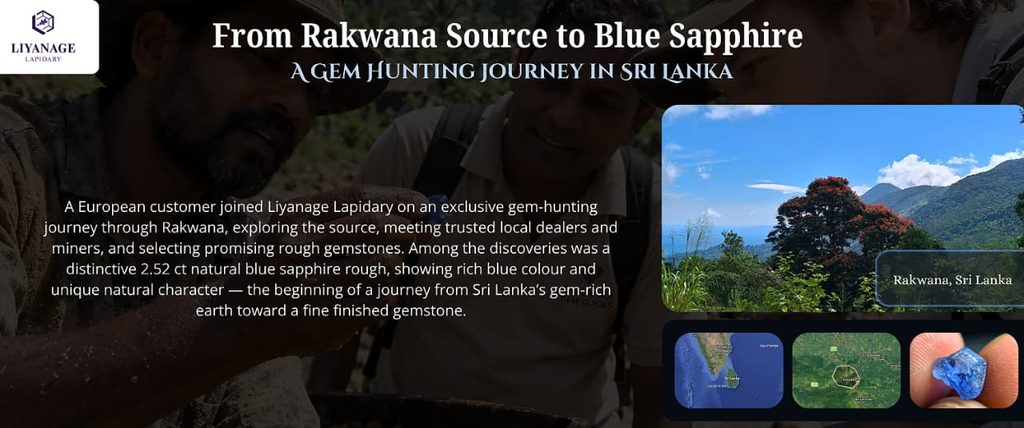
During this trip, we purchased a natural blue sapphire rough from a direct dealer known to us from (mr.ari) the Rakwana source area. Because we are familiar with this source and the people connected to it, we were able to examine the stone directly and discuss its cutting possibilities with the customer. The rough weighed 2.52 ct and measured 8.1 × 6 × 5.5 mm. In rough form, it showed a strong blue body color with an interesting natural shape, giving it a different character from ordinary calibrated rough.
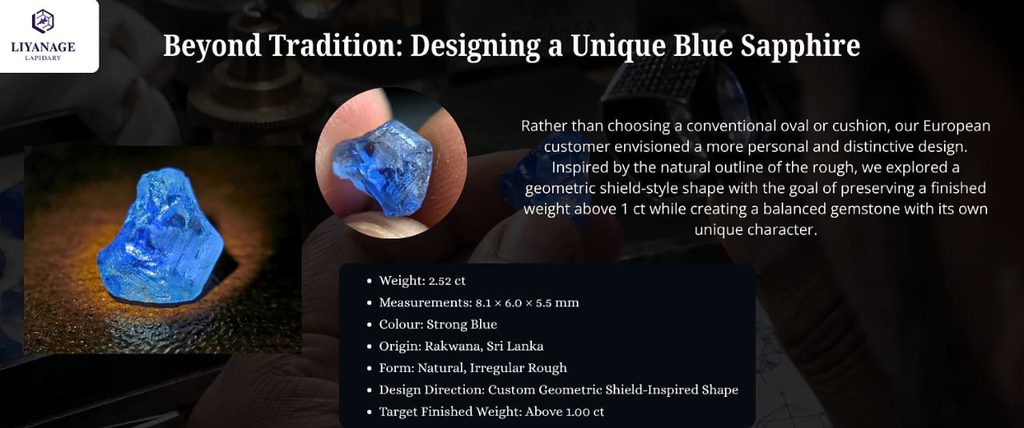
From the beginning, this stone was not selected only for a standard oval, cushion, or emerald cut. The Europe customer wanted something different and more personal, while still keeping a finished weight above 1 ct if possible. The rough had an unusual outline, and during the first examination we discussed the possibility of creating a unique shape inspired by a geometric shield style, with a small idea of a superhero emblem shape in mind. The final goal was not to copy any exact logo, but to follow the natural form of the rough and create a strong, balanced, unique gemstone shape.
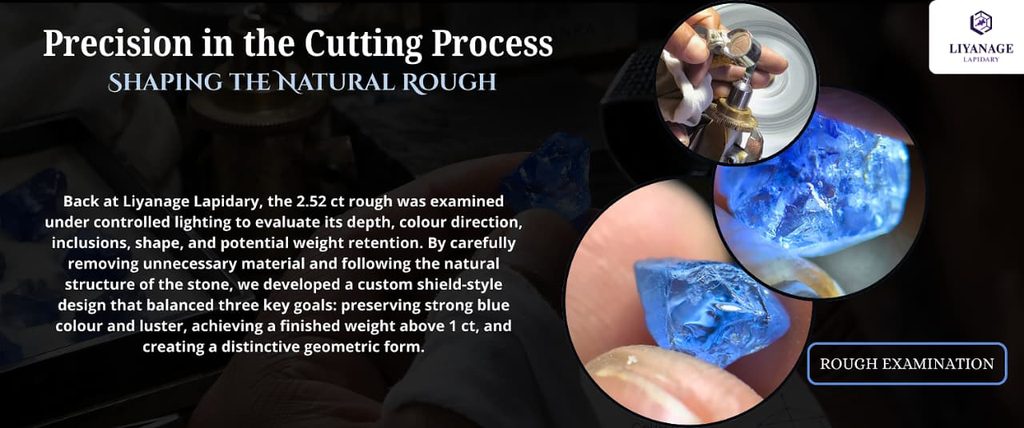
After bringing the rough to the Liyanage Lapidary cutting office, we examined it more carefully under proper light. In rough cutting, the first idea at the source area is always only a guide. The final cutting decision must be made after checking the stone again for shape, depth, color direction, inclusions, window risk, and weight retention. This rough had enough body color to create a beautiful finished blue sapphire, but the cutter still needed to remove unnecessary areas and slowly build the final outline.
The main cutting challenge was balancing three important targets: keeping the finished stone above 1 ct, creating a unique shield-style shape, and preserving the blue color and luster. When a rough stone has an irregular natural outline, forcing it into a standard shape can sometimes waste too much weight. In this case, the better decision was to follow the stone’s natural structure and create a custom geometric shield cut. This allowed us to keep more of the original material while producing a stone with a stronger visual identity.
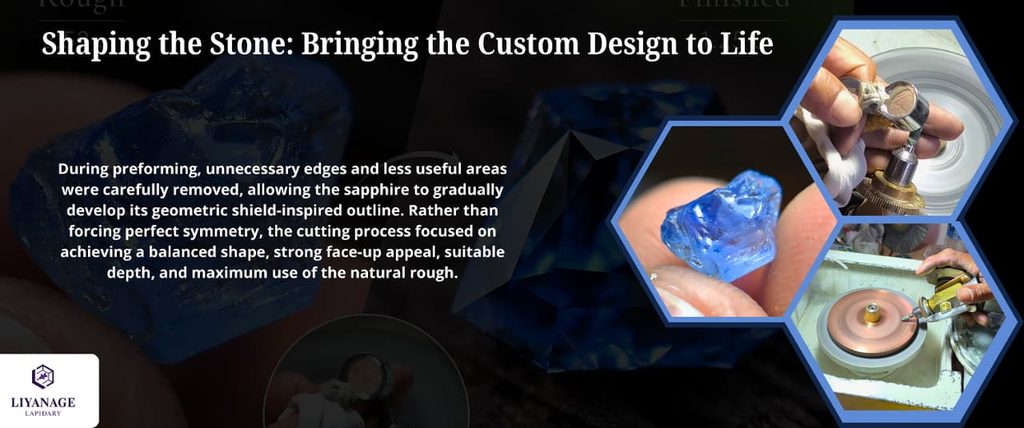
During shaping, unnecessary edges and less useful areas were carefully removed. The stone slowly started to show a form close to the planned geometric shield shape. It was not necessary to make the stone exactly symmetrical like a machine-made standard design. Instead, the goal was a practical custom cut with balance, beauty, face-up appeal, and enough depth to support brilliance. This is where lapidary experience becomes important, because the cutter must understand both the rough stone and the final visual result.
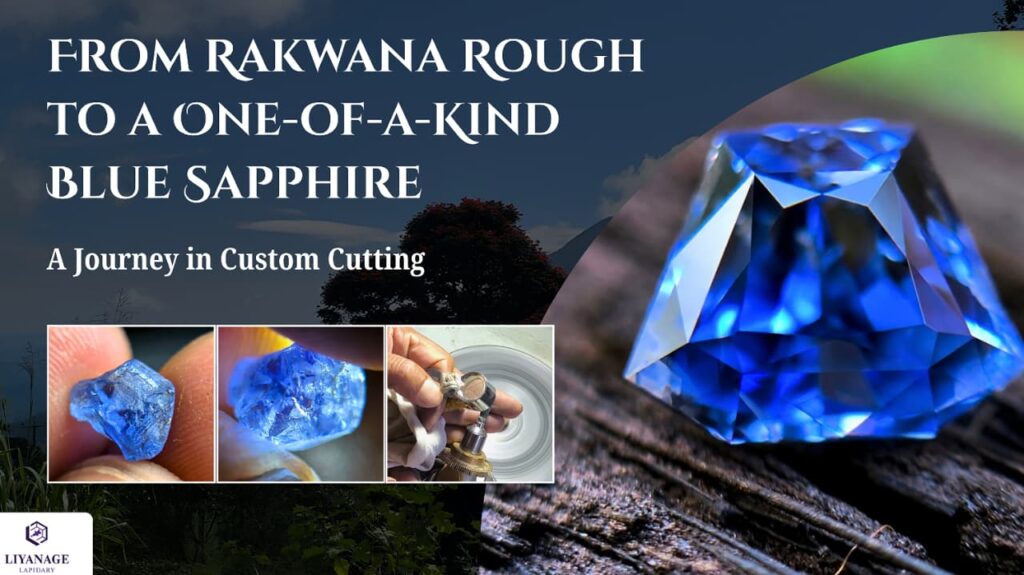
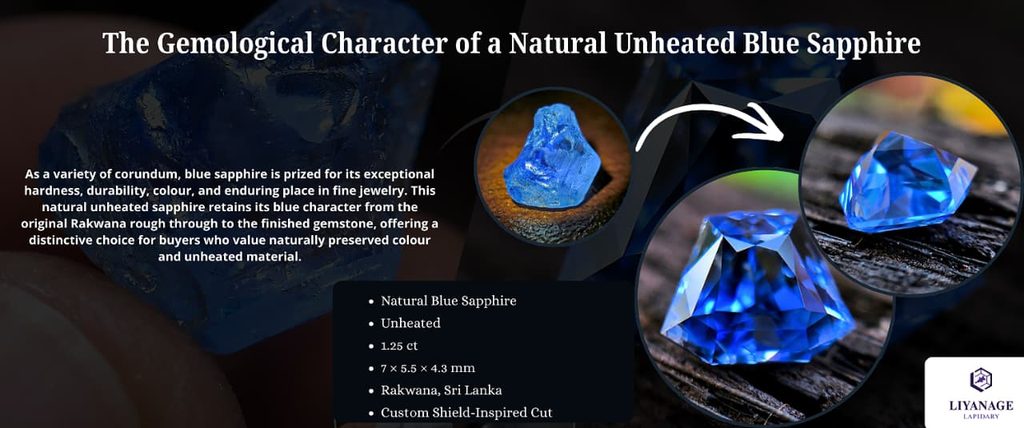
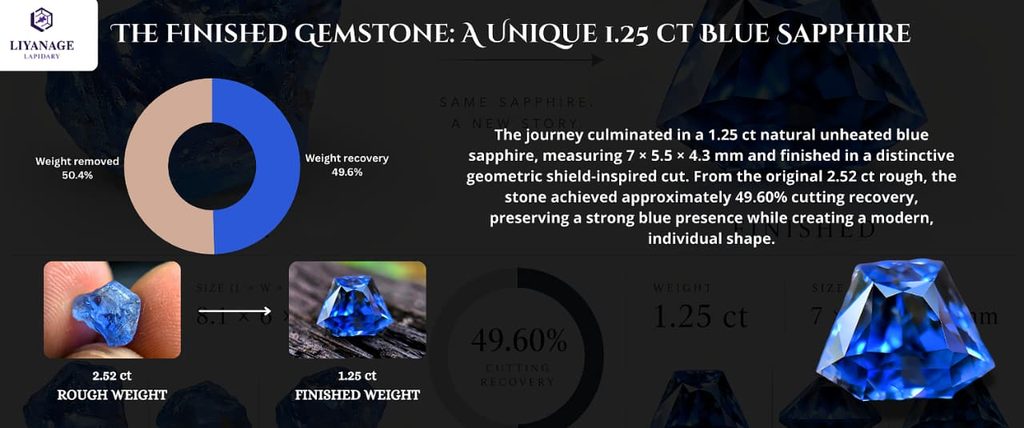
The final gemstone finished at 1.25 ct, with measurements of 7 × 5.5 × 4.3 mm. It became a unique unheated blue sapphire from Rakwana village around mining in Sri Lanka, finished in a custom geometric shield-inspired cut. The final shape gives the stone a modern, strong, and individual appearance, making it suitable for custom jewelry, collector selection, and gemstone buyers who prefer something different from standard market cuts.
The cutting recovery from rough to finished gemstone was approximately 49.60%. This means the original 2.52 ct rough produced a 1.25 ct finished sapphire, with approximately 50.40% material loss during shaping, trimming, faceting, and polishing. For a unique custom cut where the goal was to keep a 1 ct plus finished stone while creating a non-standard shape, this is a practical and successful recovery result. The recovery percentage is also a good example of how rough sapphire cutting depends on the original shape, depth, and cutting target.
Gemologically, blue sapphire belongs to the corundum family, one of the most important gemstone families in the jewelry trade. Sapphire is valued for its hardness, durability, color, and long history in fine jewelry. A natural unheated blue sapphire is especially interesting to buyers because its color has not been improved by heat treatment. In this case, the stone kept its natural blue character from rough to finished form, making the final result more attractive for buyers who prefer unheated gemstones.
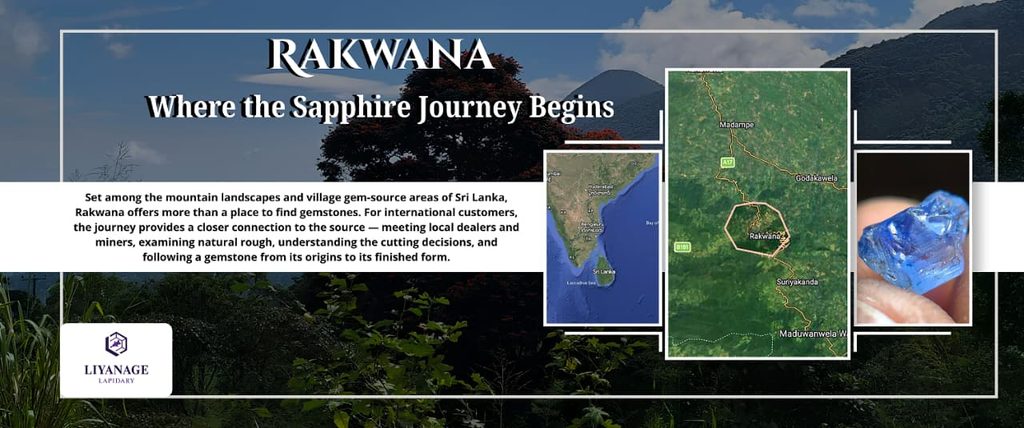
Rakwana is known among Sri Lankan gem areas for natural beauty, mountain roads, village source areas, and gemstone trading history. The region is also close to the Sinharaja rainforest area, giving the journey a strong natural and cultural feeling. For international customers, this kind of trip is not only about buying a stone; it is about understanding the gemstone from the source, meeting the people, seeing the rough, discussing the cutting decision, and finally receiving a finished gemstone with a real story behind it.
This project is a good example of what Liyanage Lapidary offers: direct sourcing support, rough examination, cutting planning, custom gemstone cutting, polishing, and international gemstone supply. From a 2.52 ct rough stone purchased in Rakwana to a 1.25 ct unheated geometric shield-cut blue sapphire ready for shipping to Europe, this journey shows how professional cutting can turn a rough gemstone into a finished stone with identity, balance, and beauty.
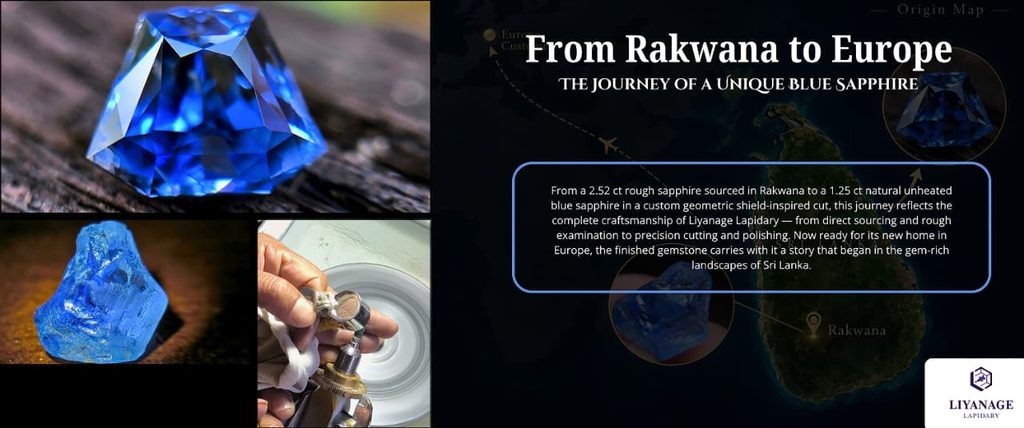
Now the finished blue sapphire is ready for its new home in Europe. It carries not only a beautiful blue color, but also a complete journey from Sri Lankan source area to professional lapidary transformation.
FAQ
1. Is this the same stone before and after cutting?
Yes. The rough blue sapphire and the finished geometric shield-cut sapphire are the same stone.
2. What was the original rough weight?
The original rough weighed 2.52 ct and measured 8.1 × 6 × 5.5 mm.
3. What is the final finished weight?
The finished gemstone weighs 1.25 ct and measures 7 × 5.5 × 4.3 mm.
4. What was the cutting recovery percentage?
The cutting recovery was approximately 49.60%, with about 50.40% material loss.
5. Why was a geometric shield cut selected?
The rough had a unique natural shape, and the customer wanted a different custom cut while keeping the finished stone above 1 ct.
6. Is this blue sapphire heated?
No. This stone is described as unheated.
7. Where was this sapphire sourced?
It was sourced from Rakwana village around mining in Sri Lanka.
8. Is this gemstone suitable for jewelry?
Yes. Sapphire is durable and suitable for rings, pendants, custom jewelry, collector settings, and dealer stock.
9. Why is custom cutting important for this stone?
Custom cutting helped follow the natural rough shape, save useful weight, and create a unique finished gemstone.
10. Does Liyanage Lapidary provide similar services?
Yes. Liyanage Lapidary provides gem travel support, rough sourcing, cutting planning, custom cutting, polishing, and international gemstone supply.